
Amy’s Lavish Loos
The situation and why we needed to get it right:
Gary Holbrook is the kind of homeowner who notices things, being an architect and all, and what he noticed in his 1970s Westside Bend home was a primary bathroom that had been losing the battle against time. The platform tub that dominated the space wasn’t just dated; it was turning into a liability.
At its height, stepping backwards into it on a wet floor was a genuine fall risk, a concern Gary and his wife Amy were already thinking about as they planned to be in their home long term. Besides that, there were signs of past leakage under the tub, and the tile was cracking.
And the bathroom, for all its square footage, felt smaller than it was. The old layout was stealing space that should have been livable. Gary wanted it right. Not just updated. Right. The secondary bathroom was also in desperate need of a glow up.
Before construction began, we pressure-tested:
Before we touched a single wall, we pressure-tested the existing plumbing. When a homeowner says they think there’s been leakage, you don’t shrug and demo. You find out. What we found told us exactly what we were walking into.
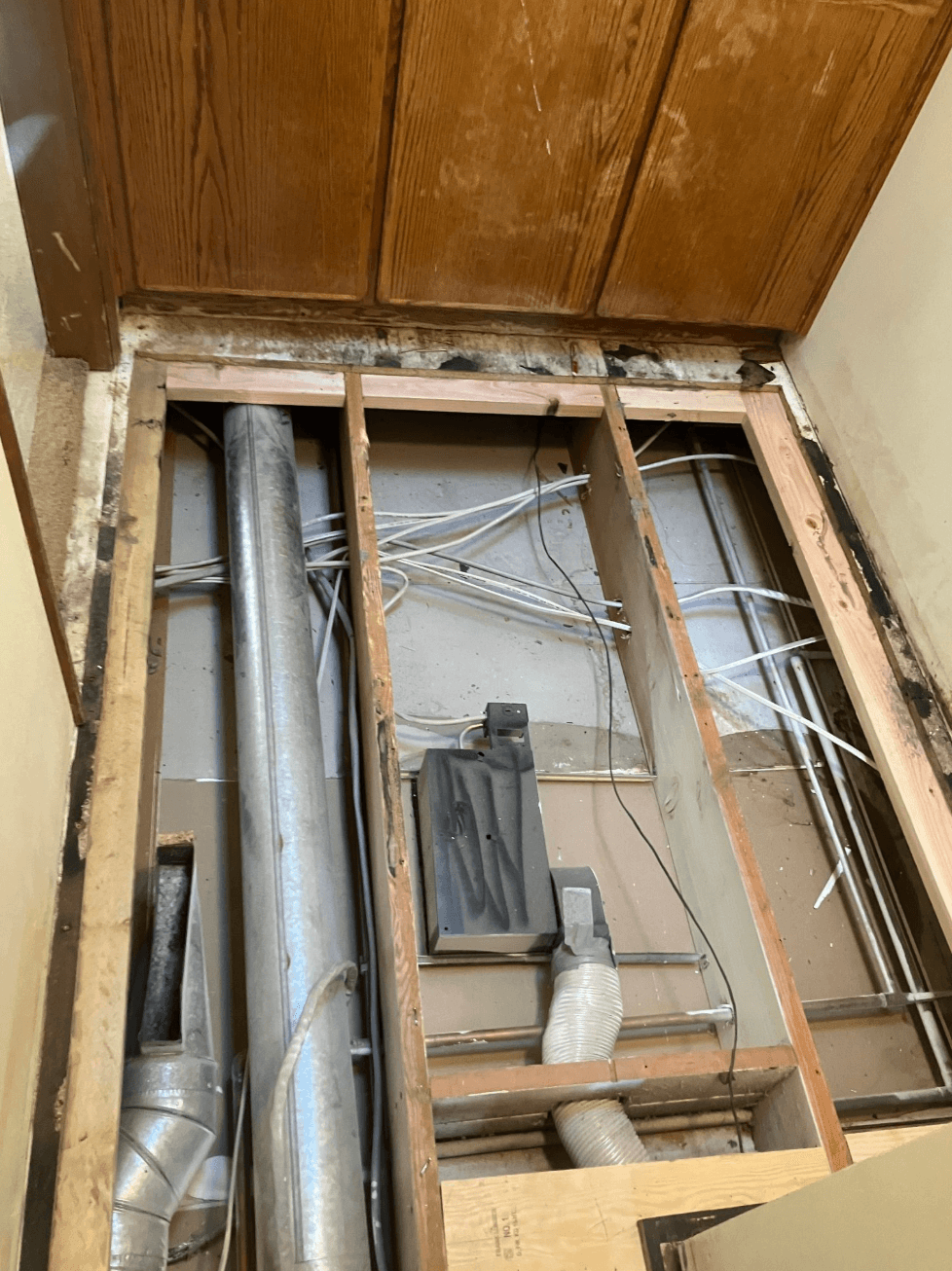
WE WENT UNDER THE HOUSE AND EXAMINED THE FRAMING UNDER THE SHOWER AND TUB AND COULD SEE EVIDENCE OF ROT/WATER coming from a leak in one of the pipes. THIS CONFIRMED THE HOMEOWNERS SUSPICION.
The Real Challenge
On the surface, this dated bathroom needed to catch up with the decade. Under the surface, literally, it was a different story.
The sunken jacuzzi tub looked like an upgrade from the 1970s. It wasn’t being used, which might have been a hint. When we got into it, we found out why: years of slow leakage had done serious damage to the wood framing underneath. The tub wasn’t just cosmetically wrong. It was actively rotting the house.
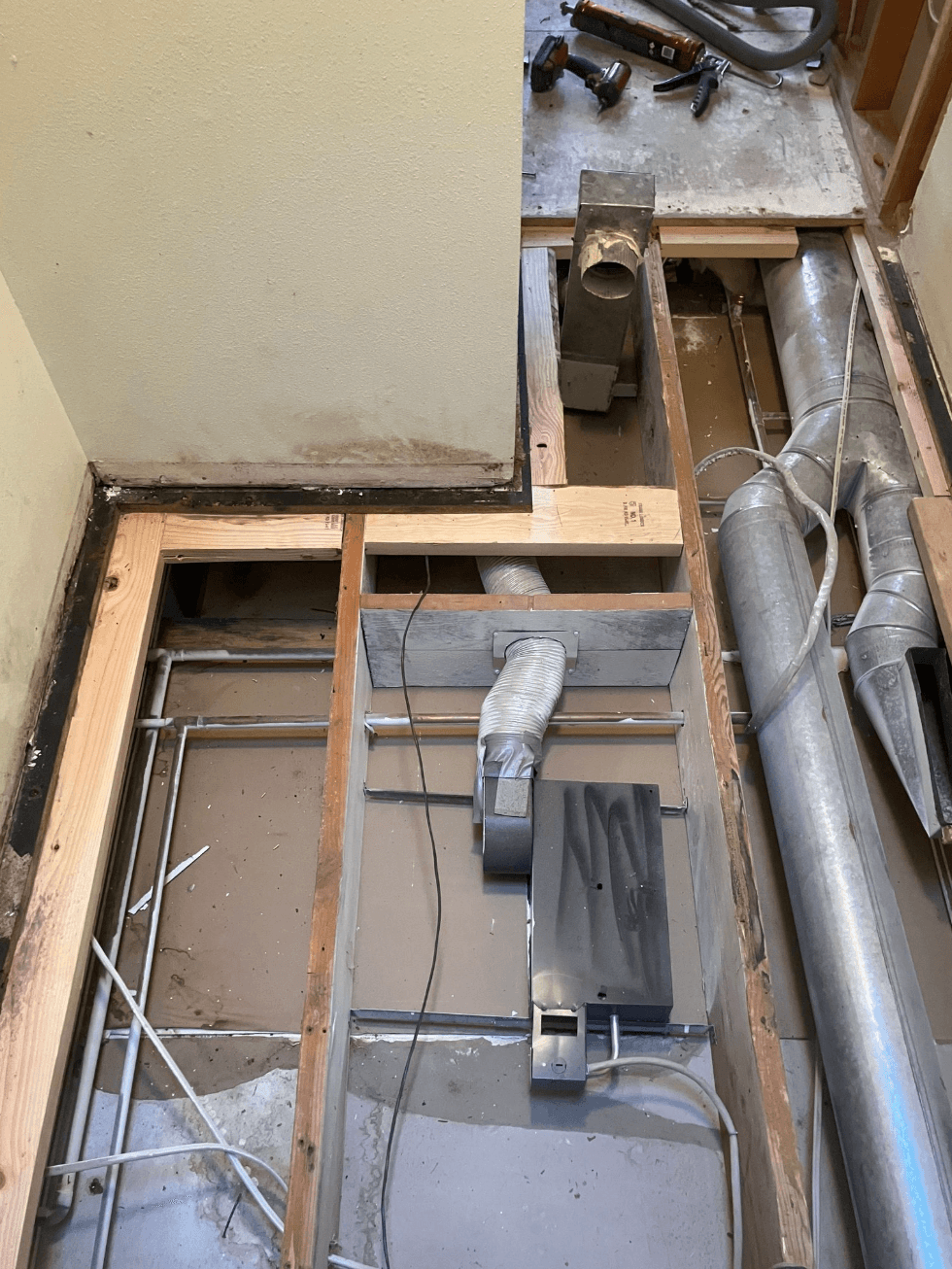
Then there was the HVAC. To properly redo the shower plumbing, we needed to get into the crawl space, which meant moving a large section of ductwork that was directly in the way. Moving the HVAC meant turning off the heat. In Bend, in a home where people live, that’s not a plan you stall on. You move fast.
The real challenge wasn’t the tile, or the fixtures, or the layout. It was finding everything that was wrong, fixing it all, and doing so in a way that left this home better than they found it; not just different.
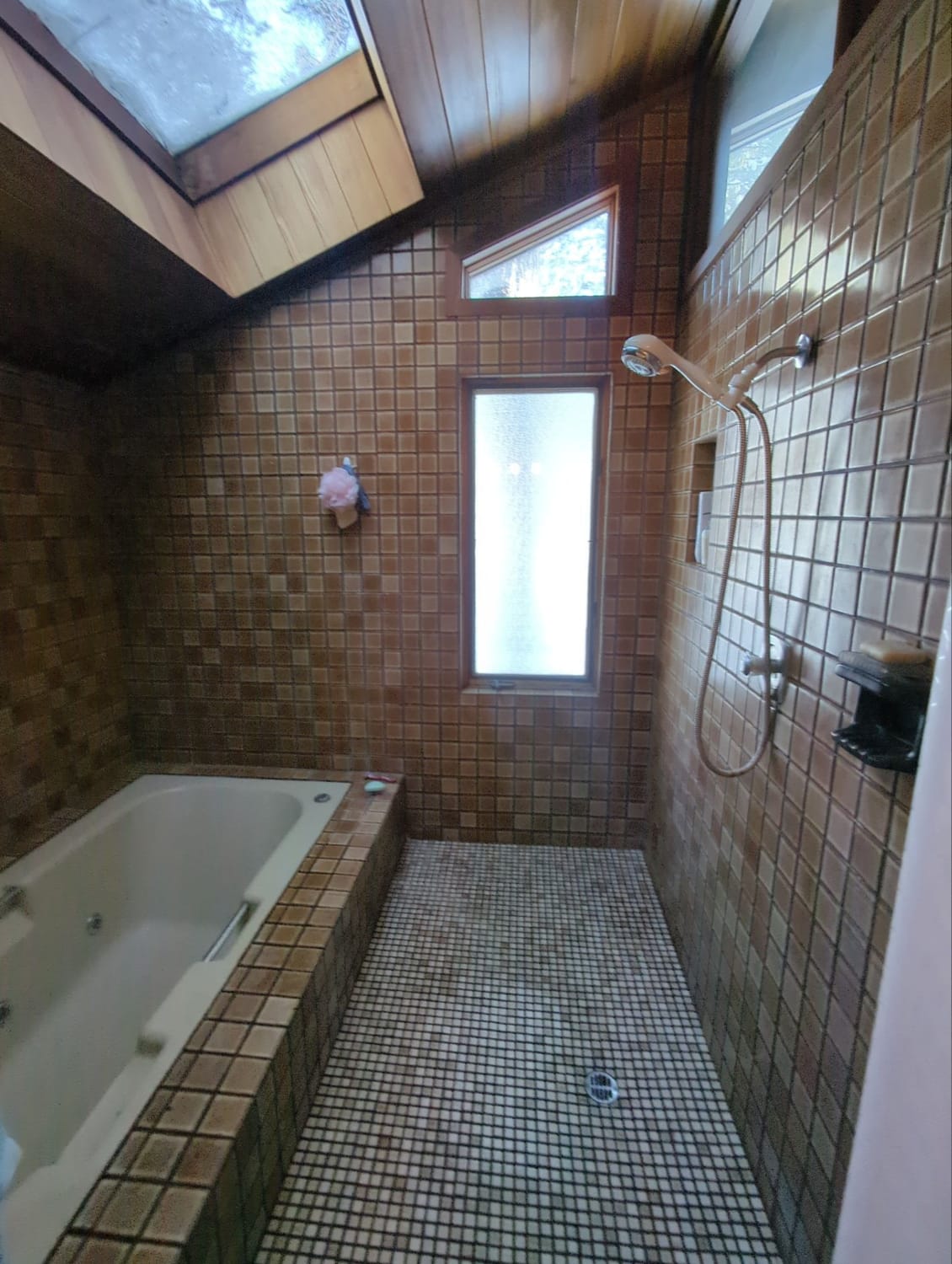
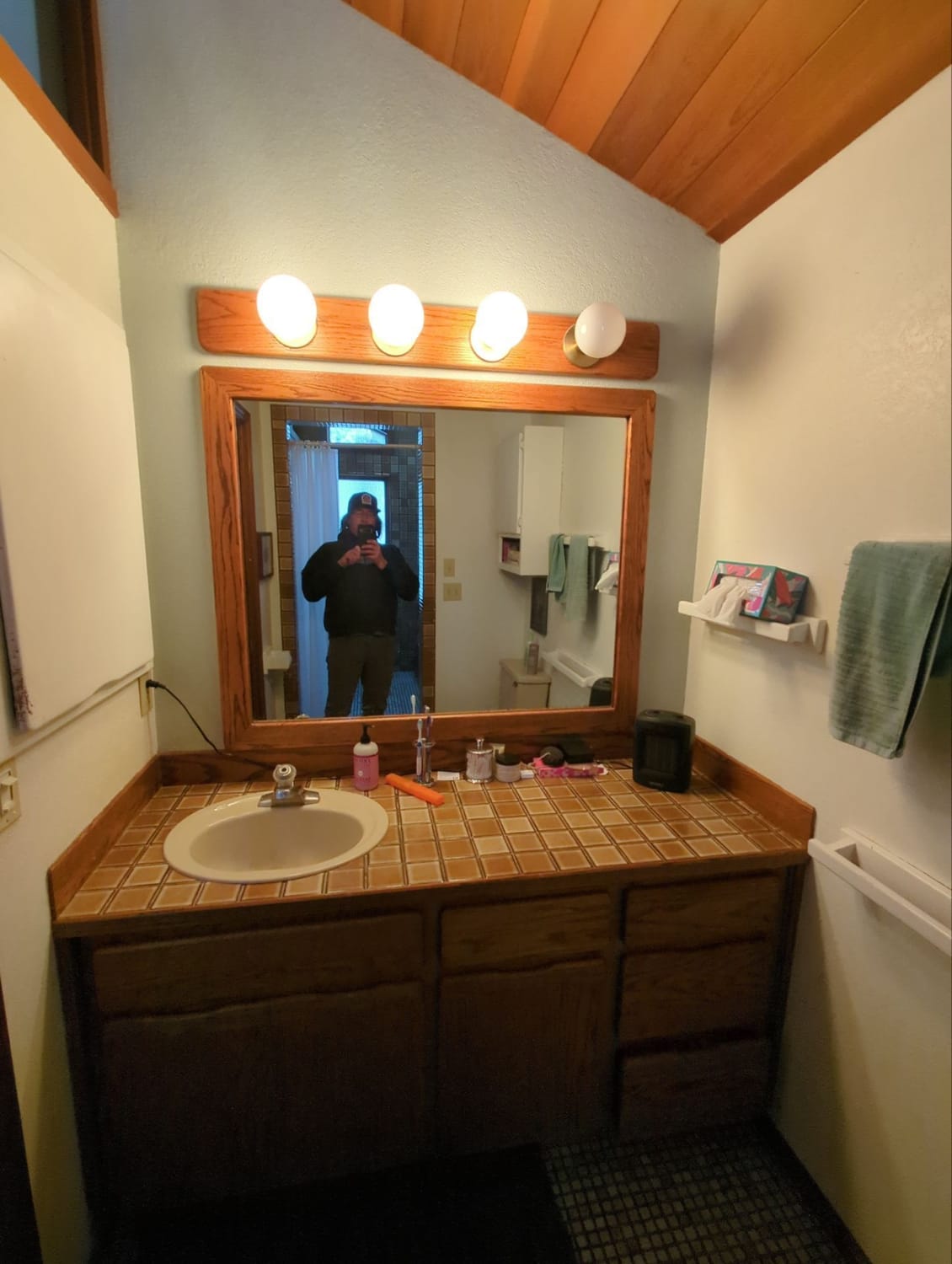
Before: platform tub
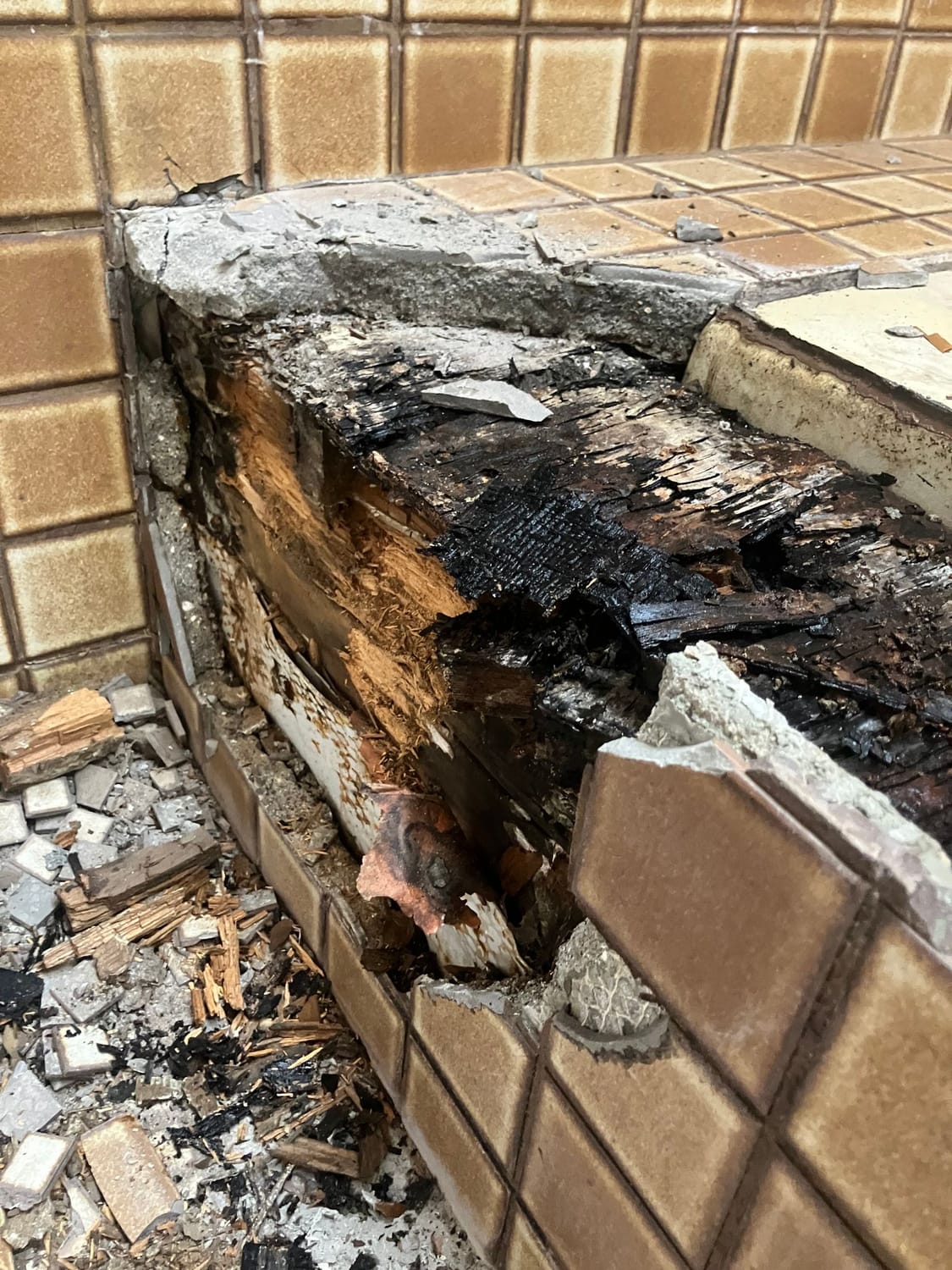
Before: cracking tile
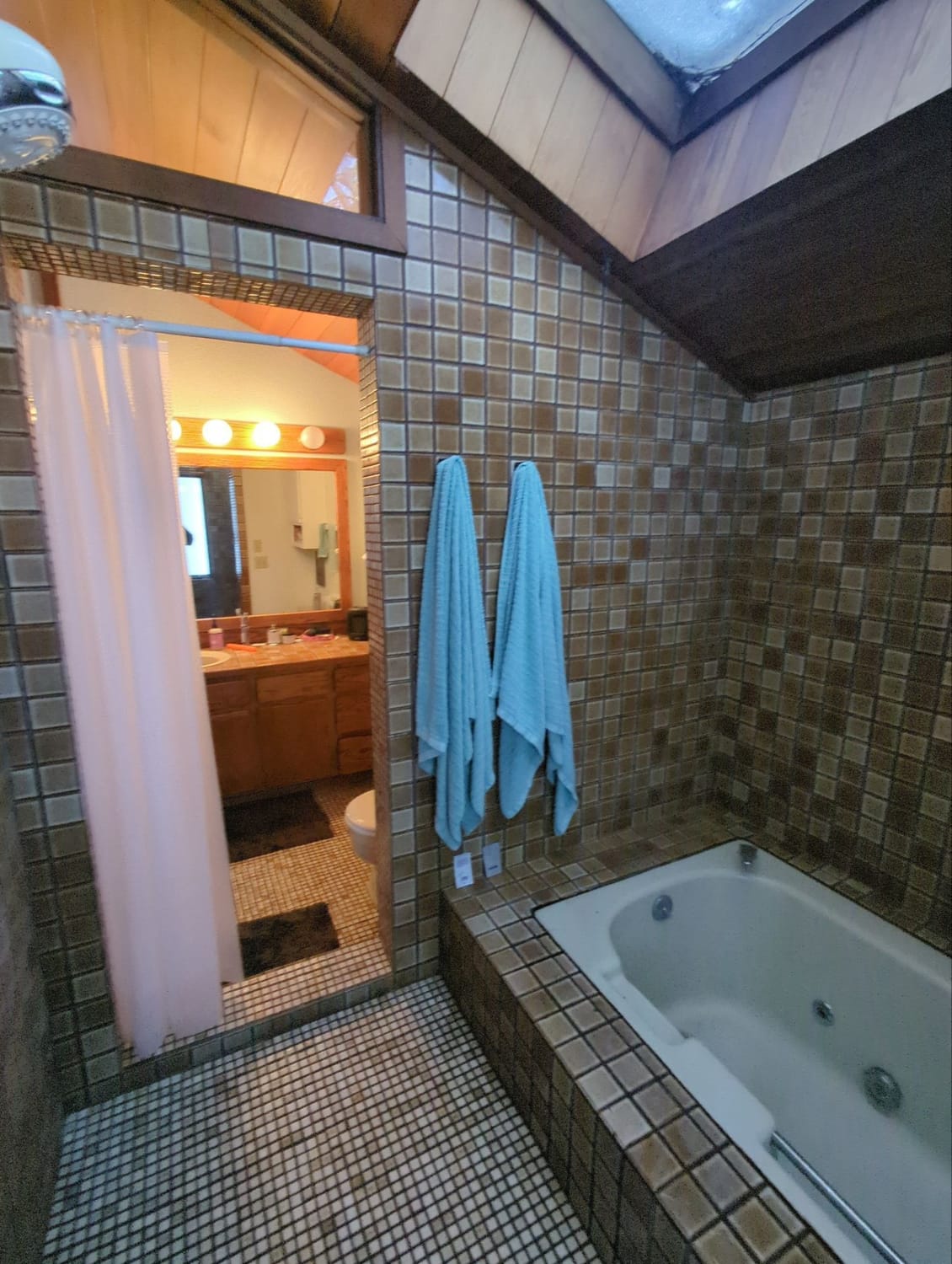
Before: original layout
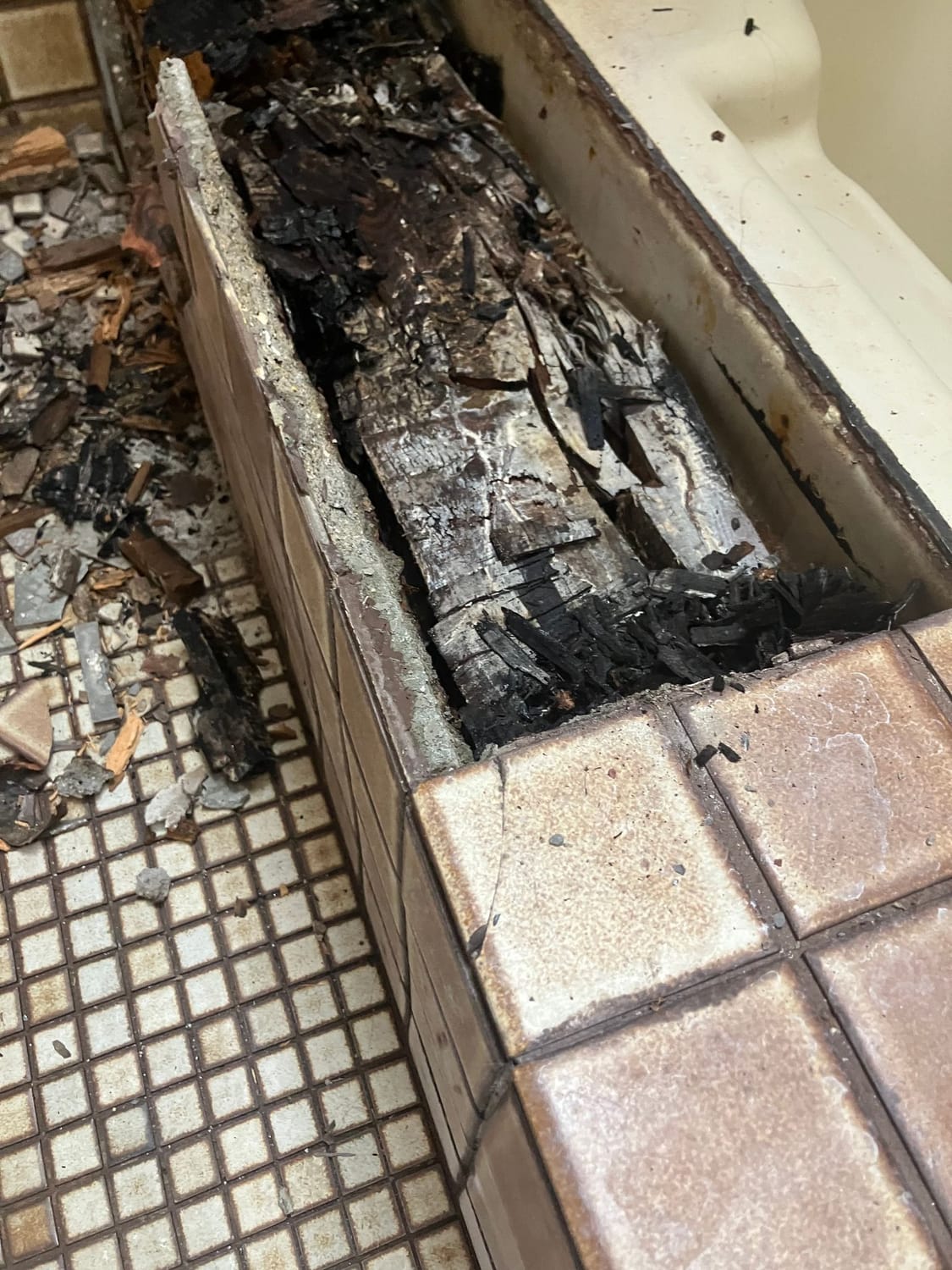
Before: sunken jacuzzi
Our Approach
Step 1 — Walk the Space and Listen.
Most homeowners know something is wrong before they can name it. Gary was different; he could name it. Being an architect didn’t make the conversation shorter; it made it better.
We talked through what the 1970s construction was likely hiding. We talked about aging in place not as a sad inevitability, but as smart planning. We talked about what Amy actually wanted it to feel like. That conversation is why the result looks the way it does.
Step 2 — Test Before You Guess
Gary already suspected leakage. we thoroughly investigated before demo to know, not suspect. there’s a version of this job where a contractor takes gary’s concern at face value, demos, and figures it out as they go.
That version costs more and takes longer and produces worse results. we don’t do that version. went under house and verified. also discovered would need to undo hvac to work on it… and in december we needed to make a really good plan as the homeowners were still living there.
Step 3 — The Crawl Space Wasn’t Going to Move Itself
Here’s the thing about proper plumbing work: it has to be done from underneath. And underneath this bathroom, between the crew and the plumbing, was a section of HVAC ductwork that had been happily living there since the Ford administration.
We pulled it out. Carefully. Turned off the heat, worked fast, got under the house, moved the plumbing, put the HVAC back together, and restored heat before it became a problem. Is that in the original scope? Technically no. Is it what was needed to happen to do the job right? Yes. So that’s what we did.
Step 4 — Schluter: The Detail That Separates Good from Done Right
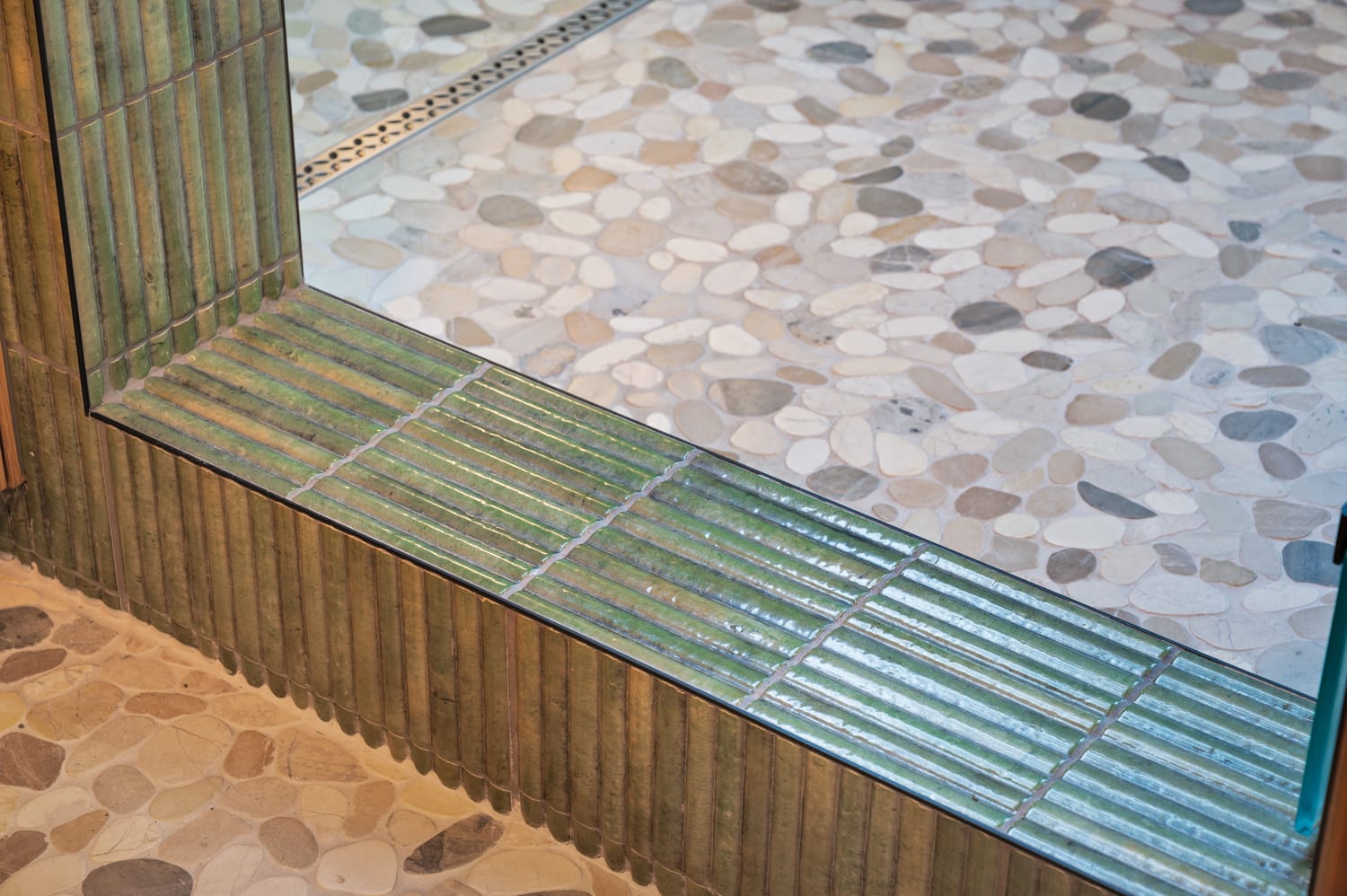
Amy and Gary wanted Schluter components throughout the shower. Schluter is the right call for the trim profiles, waterproofing system, and transitions that give a tile installation the kind of finished look that holds up for fifteen years the same way it looked on day one.
It required precise installation and alot of preplanning, making sure we had all the products on hand before starting because they are all pre-ordered, you cant just go and buy a part that you forgot. it’s also more demanding to install. every profile gets set before the tile goes in. every transition gets planned in advance. every corner gets mitered to fit. we do a lot of schluter work. we like it. it shows.
Step 5 — A Layout That Makes Sense
The old layout was working against itself. We moved a wall to free up cabinet space. We relocated the toilet into the shower room, which sounds counterintuitive until you see how much it opens up the vanity area.
This was a challenge to install a toilet on a sloped shower pan, but out team knew what to do. We cut a tile the same shape as the bottom of the toilet and set it on its own bed of thinset to level it out, then tiled around that. The result is a bathroom where every square foot serves a purpose.
And the aging-in-place thinking Gary brought up in that first conversation? It’s built in. Blocking rough-framed into the walls for grab bars whenever they’re needed down the road. You won’t see it now. You’ll be glad it’s there later.
Step 6 — If You Can’t Buy It, Build It
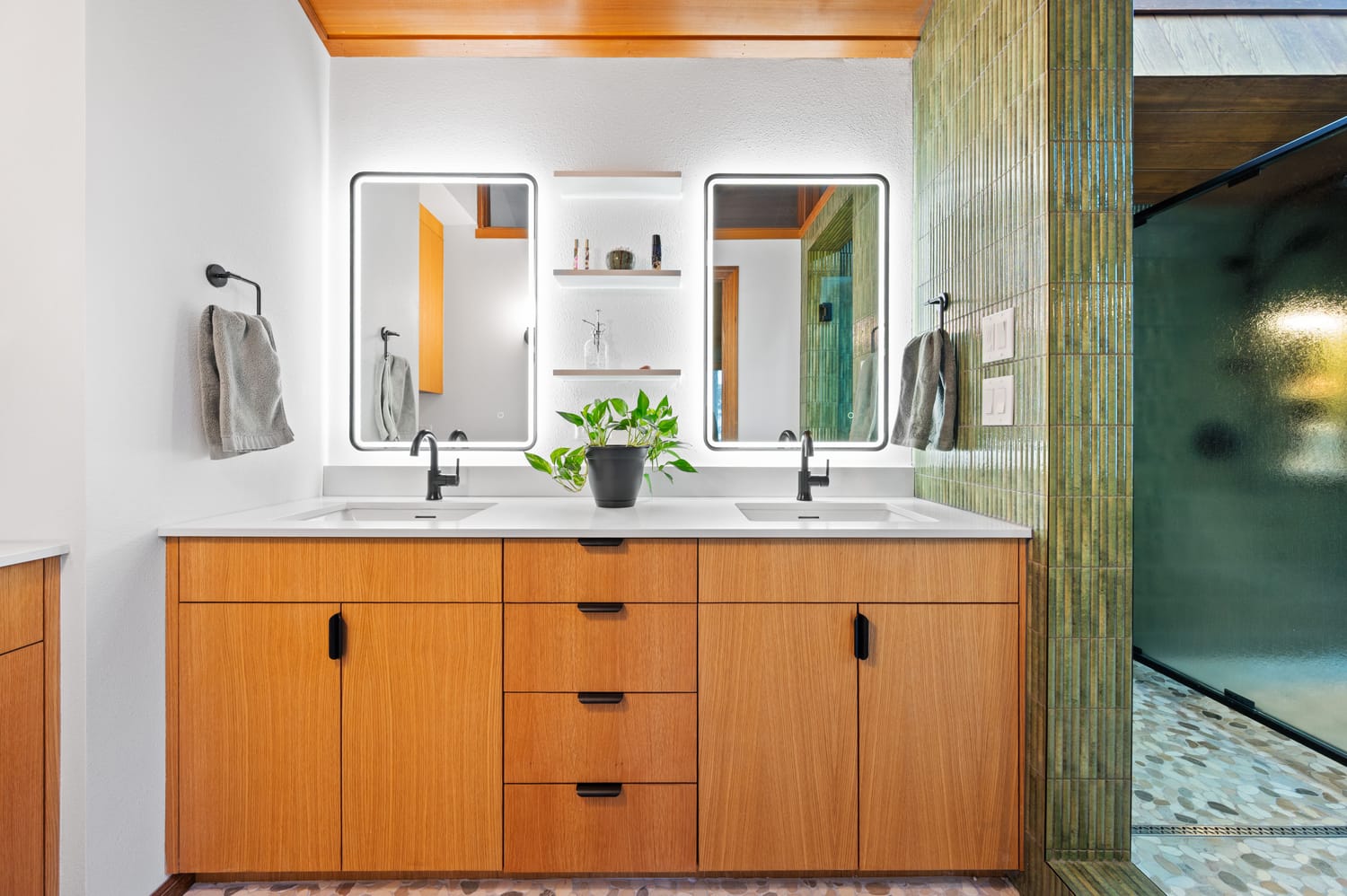
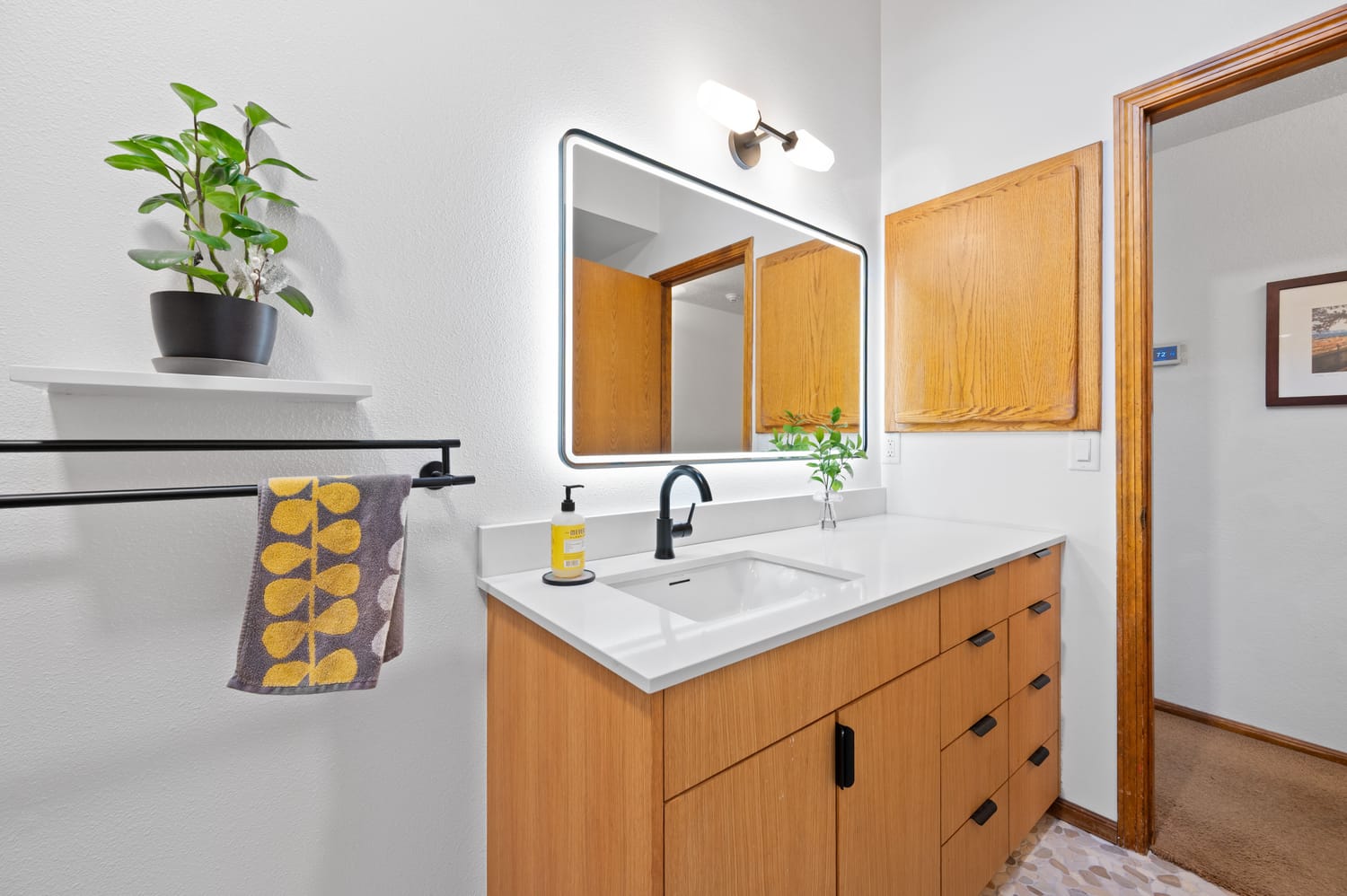
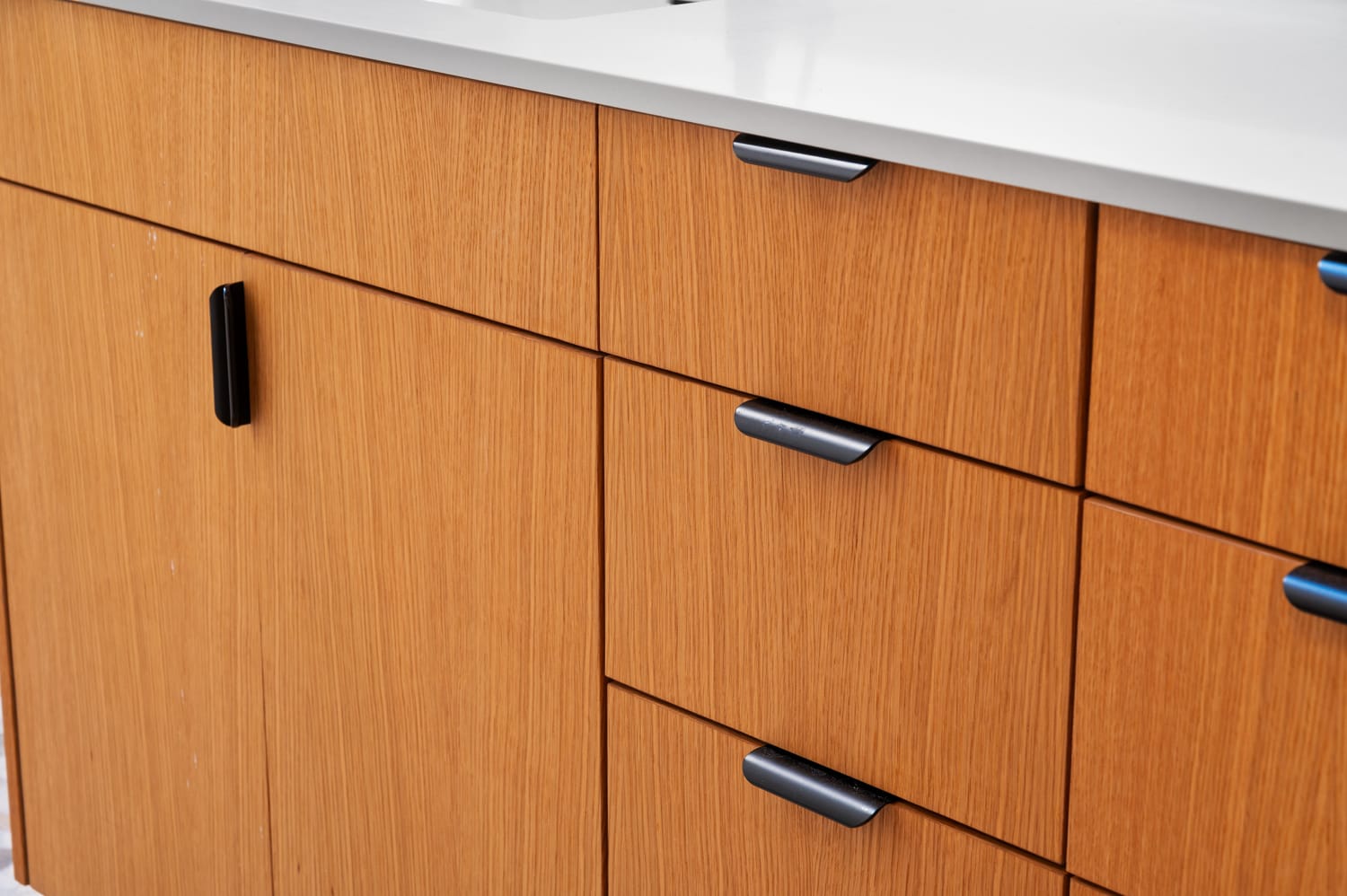
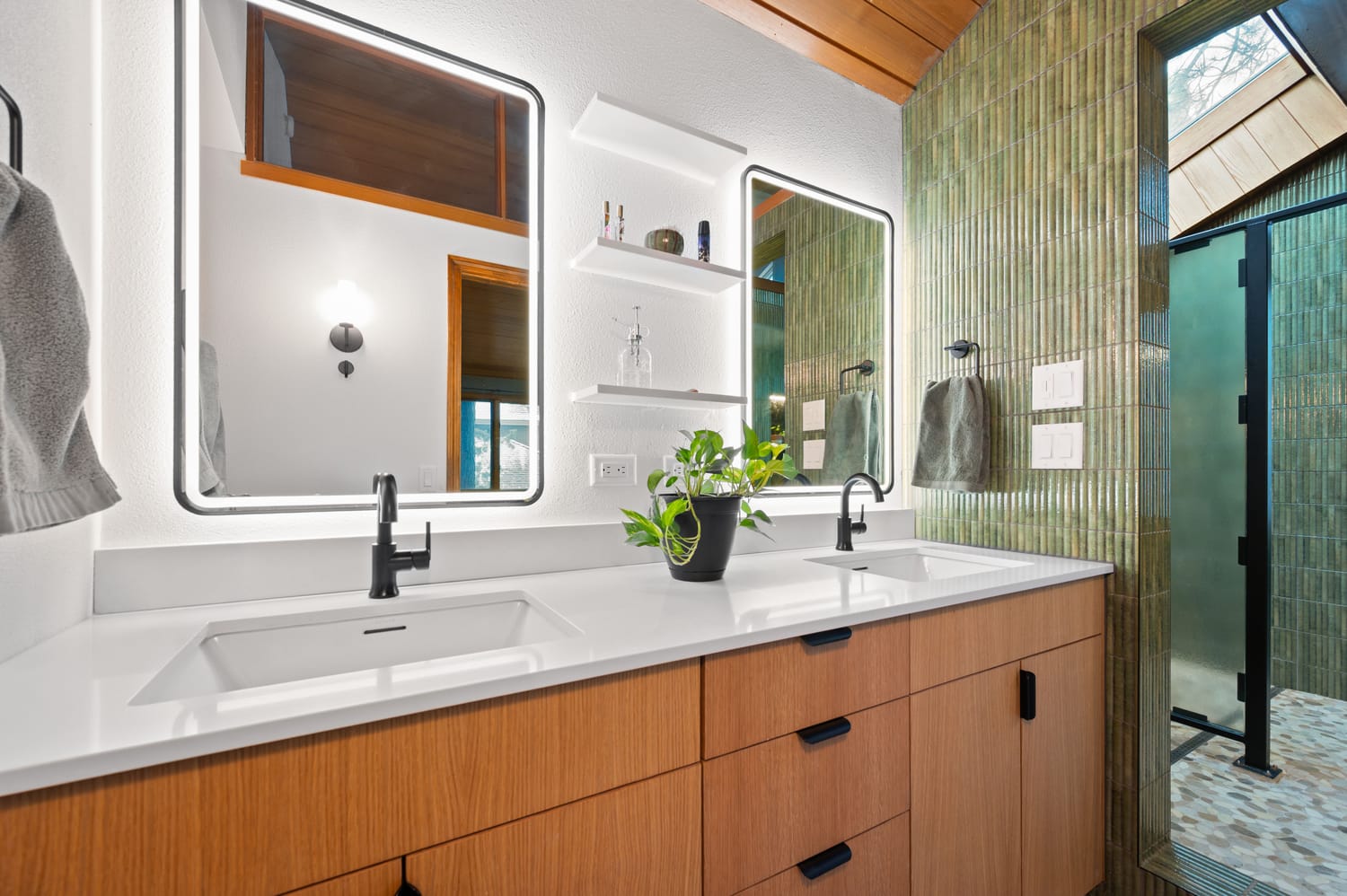
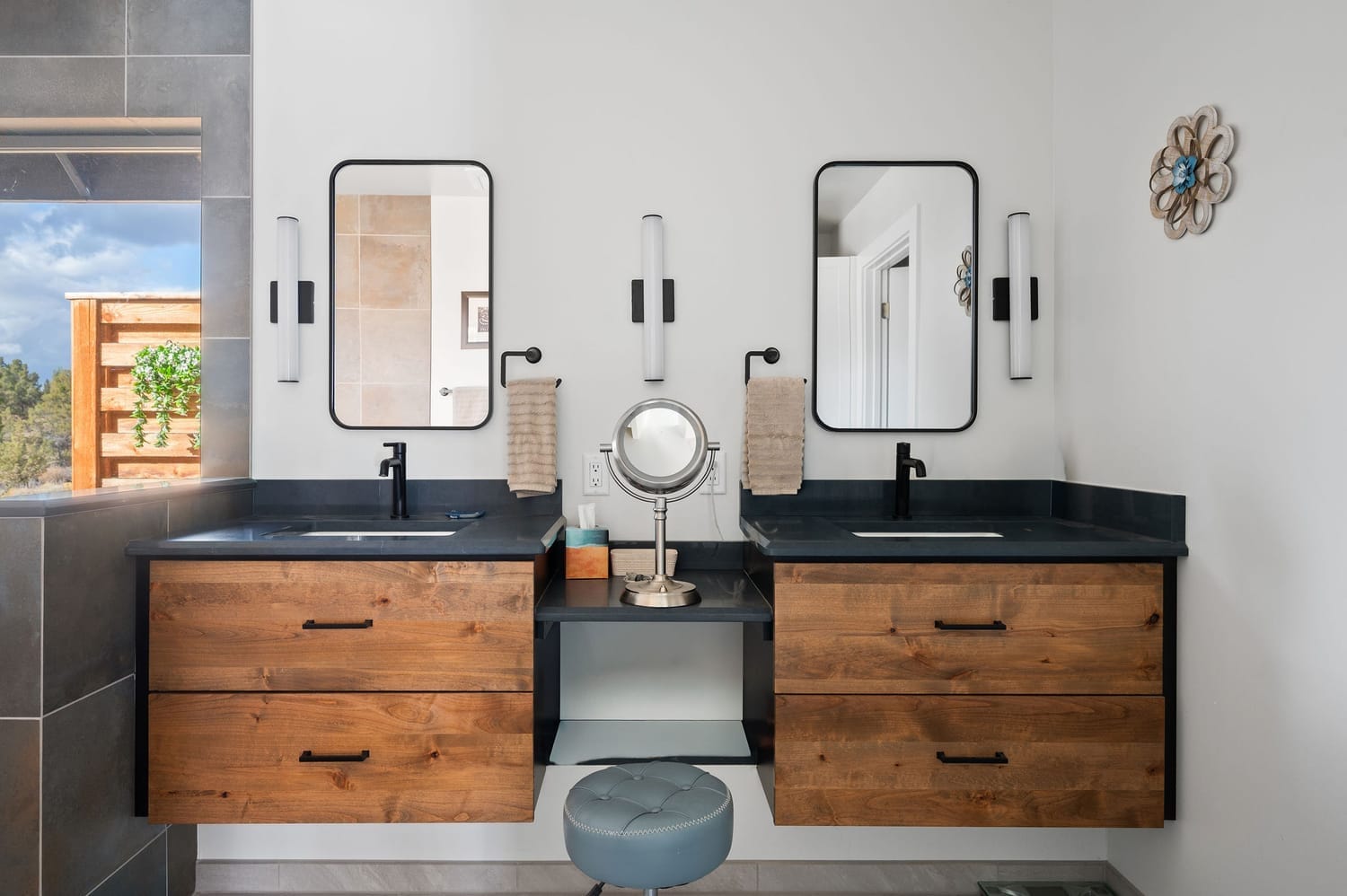
The vanity cabinet was built in-house by Branch Brothers. Rift-sawn white oak, custom dimensioned for the space.
Rift-sawn has a straight, consistent grain that handles bathroom humidity well and ages without drama. It fits the mid-century modern character of the house without looking like a prop.
Gary appreciated it immediately. Architects tend to notice when something was actually made for the room it’s in.
What Changed:
The Rot Is Gone. So Is the Tub.
The sunken jacuzzi that nobody used and that was slowly destroying the subfloor beneath it — gone. The platform tub that required a small act of courage to enter safely — gone.
In their place: a proper walk-in shower that takes up less psychological space and infinitely more square footage.
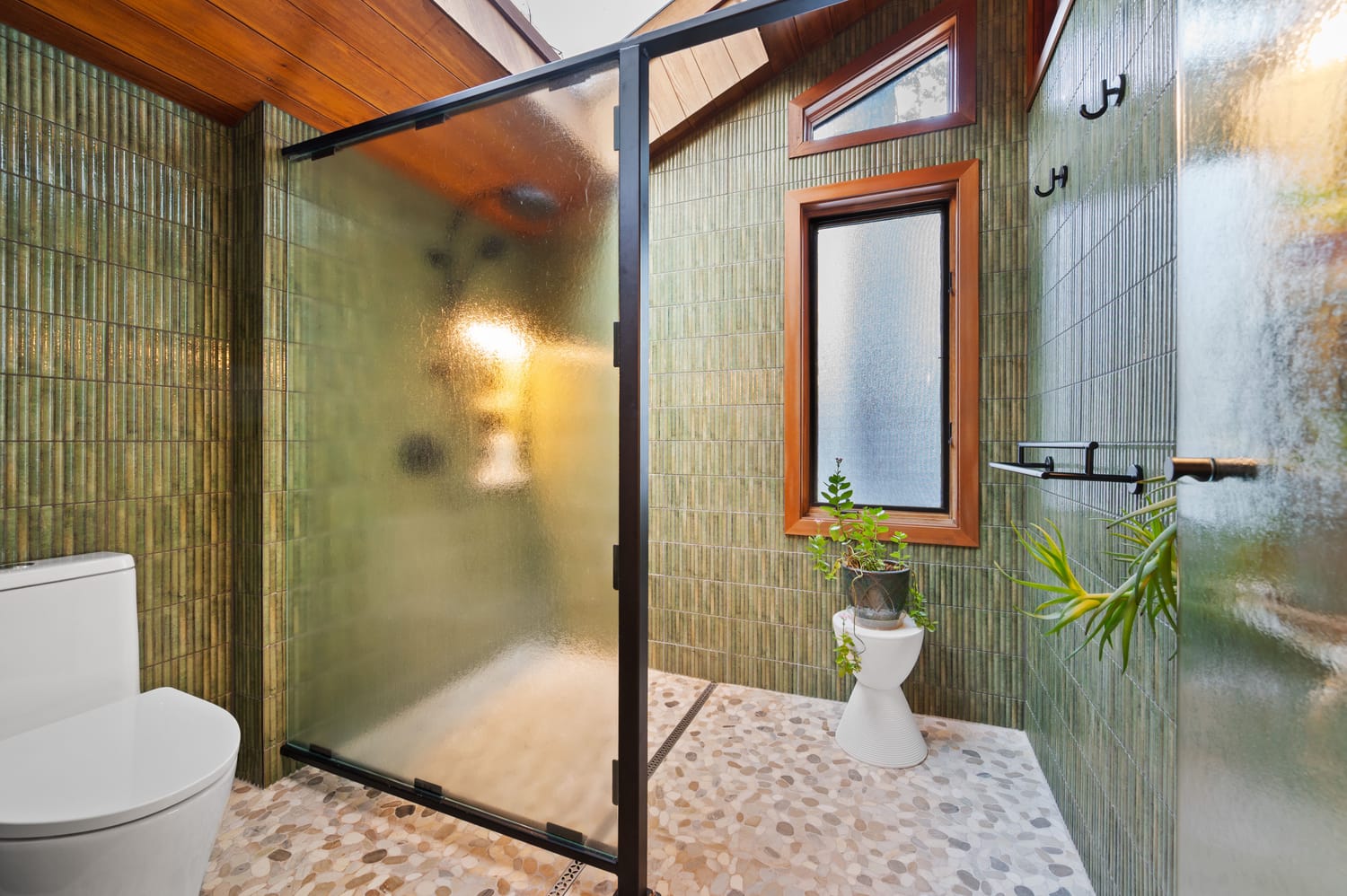
A Shower Room Worth the Name
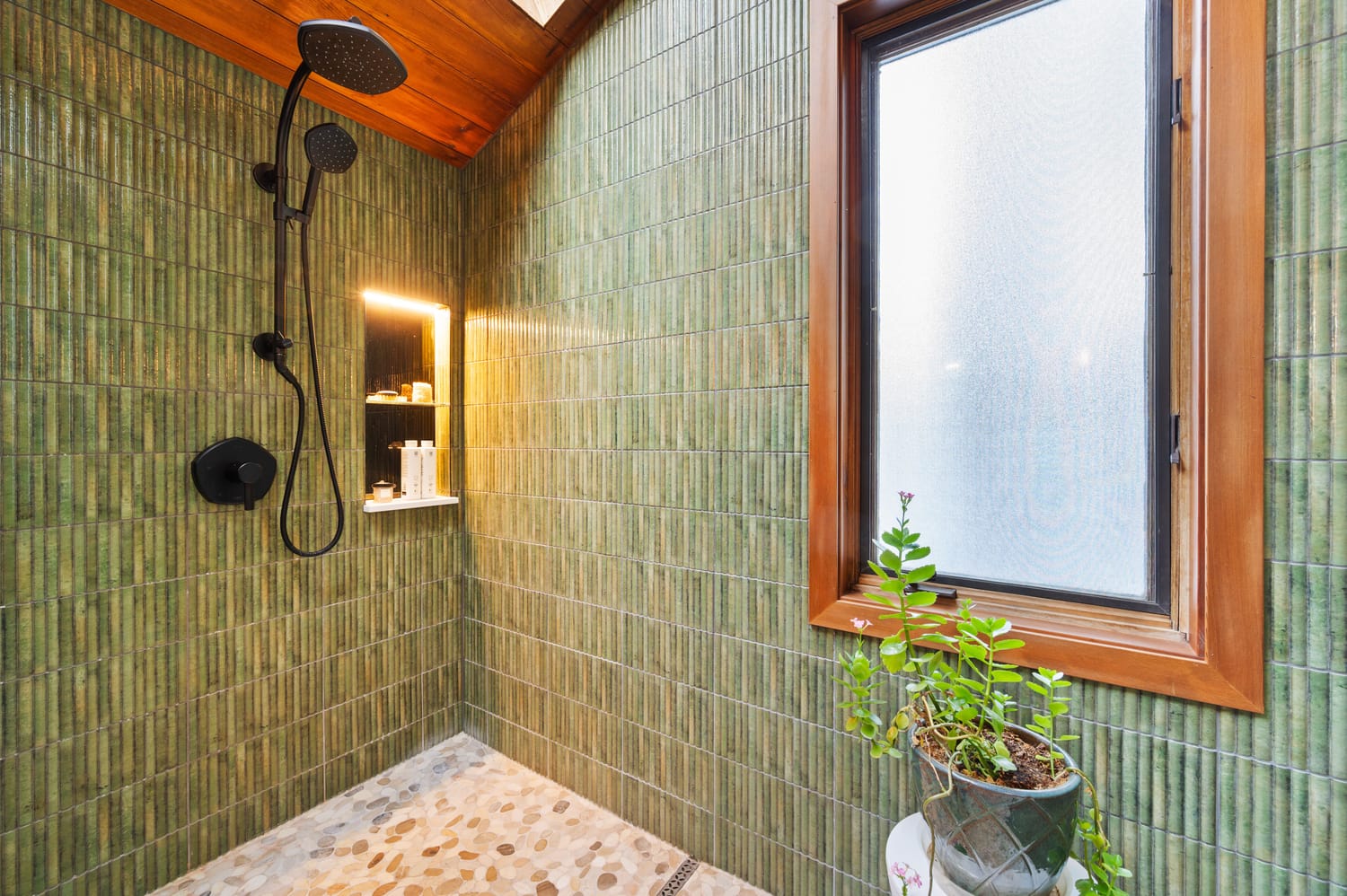
Full-length slot drain down the center. Custom river rock floor. Glass dividing wall. Two lighted niches with custom glass panels. This isn’t a shower stall. It’s a room.
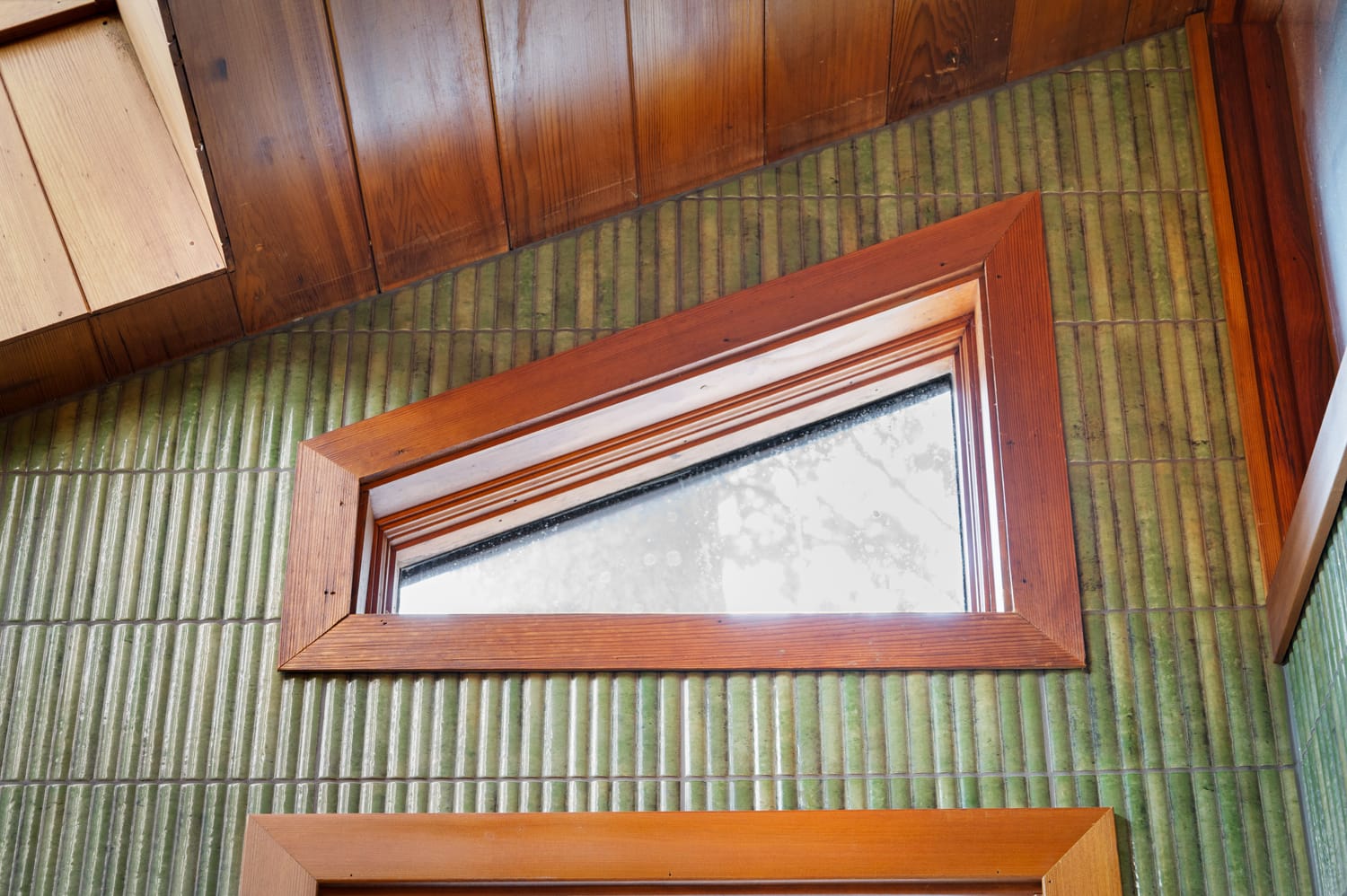
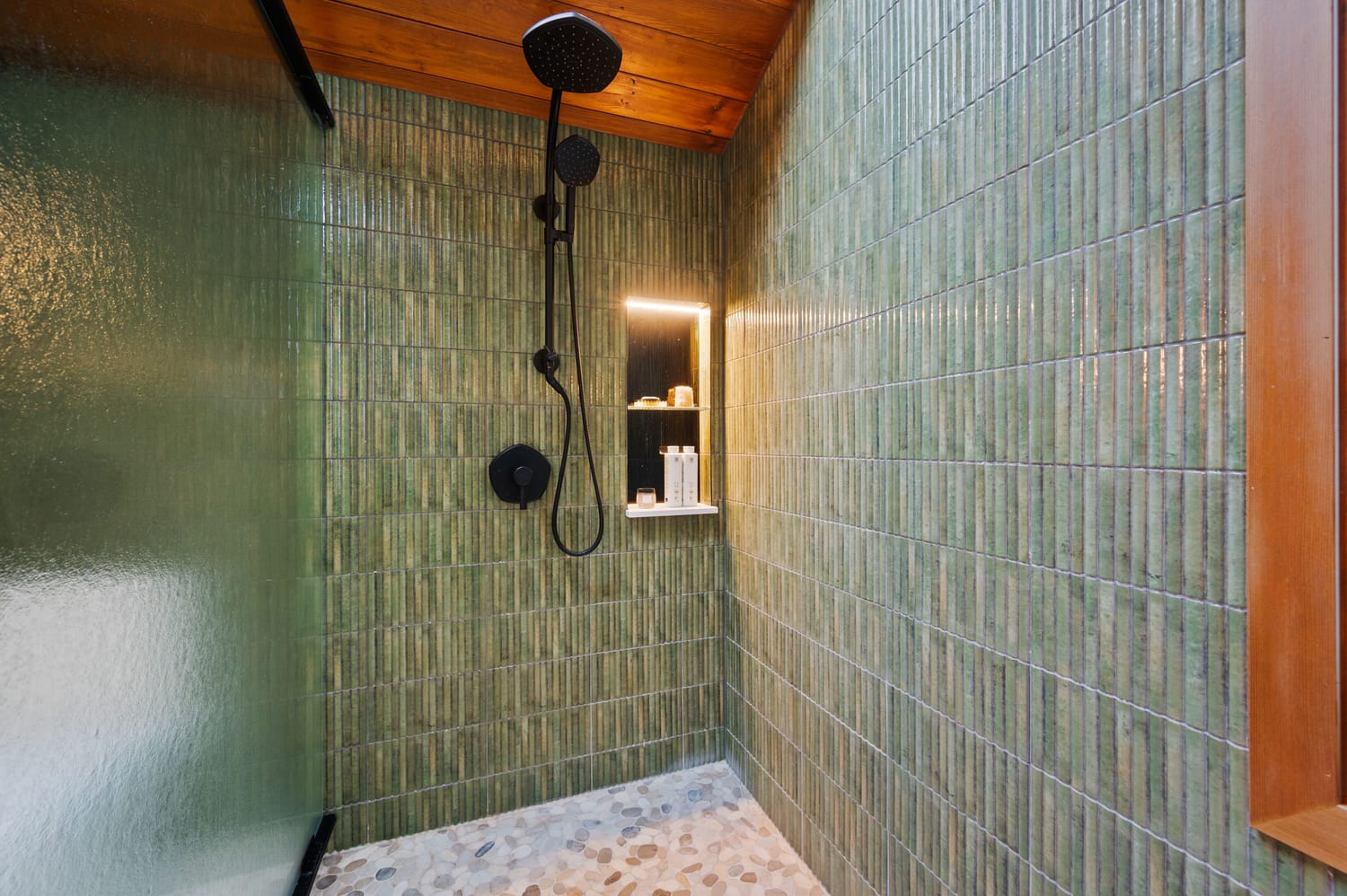
The Tile That Makes You Forget You’re Inside
The tile Amy chose mimics bamboo — vertical grain, organic texture, something that reads more like nature than a product catalog. Pair that with the open beam ceiling and a skylight overhead, and the bathroom stops feeling like a room.
It starts feeling like somewhere you actually want to be. That’s a design decision. It’s also just good taste.
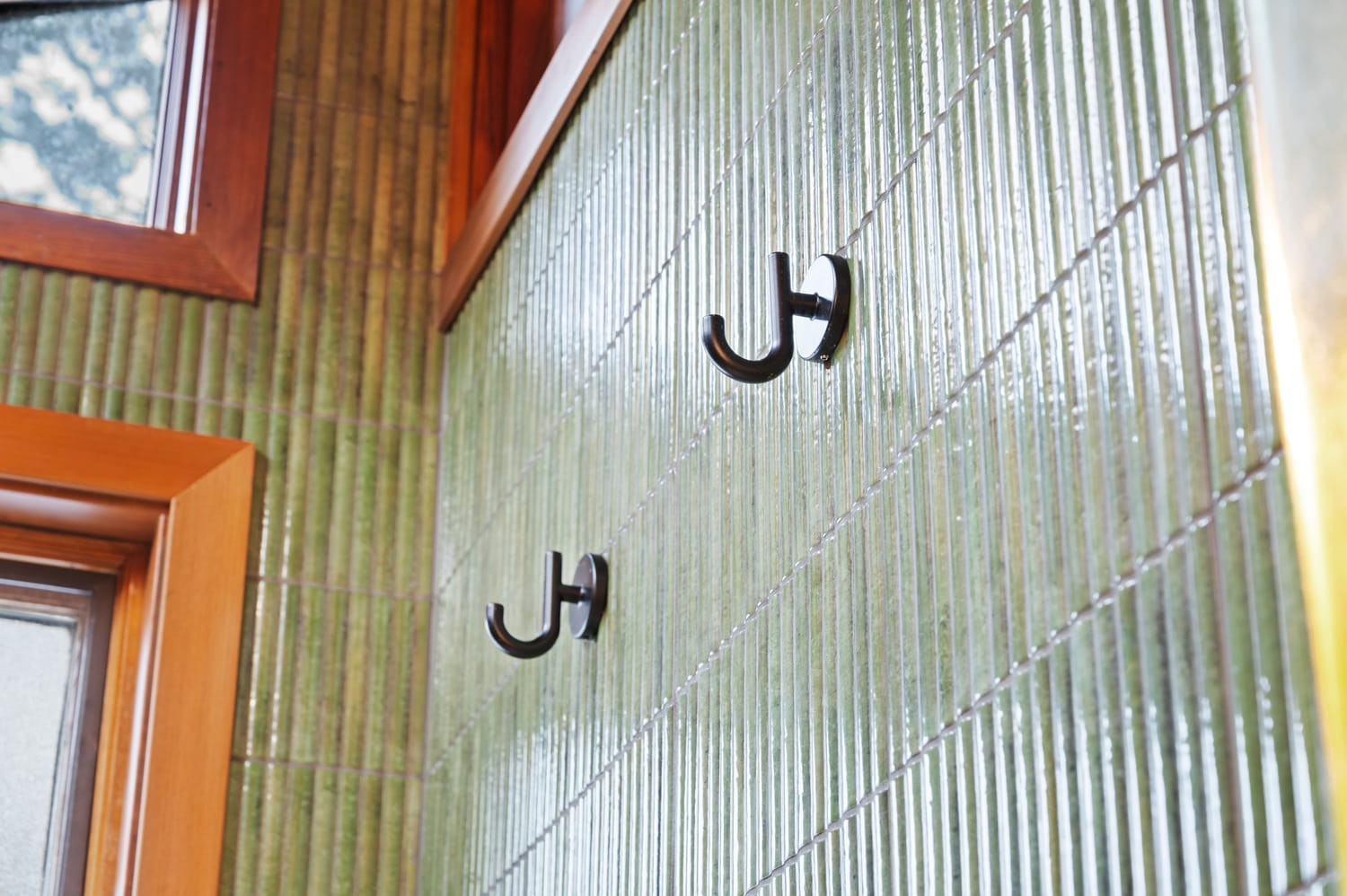
Made Here. Fits Perfectly. Imagine That.
The vanity cabinet was built in the Branch Brothers shop. Rift-sawn white oak, sized exactly for the space. Not close. Exactly. When you build it yourself, it fits the way things are supposed to fit.
While We Had the Run of the Place
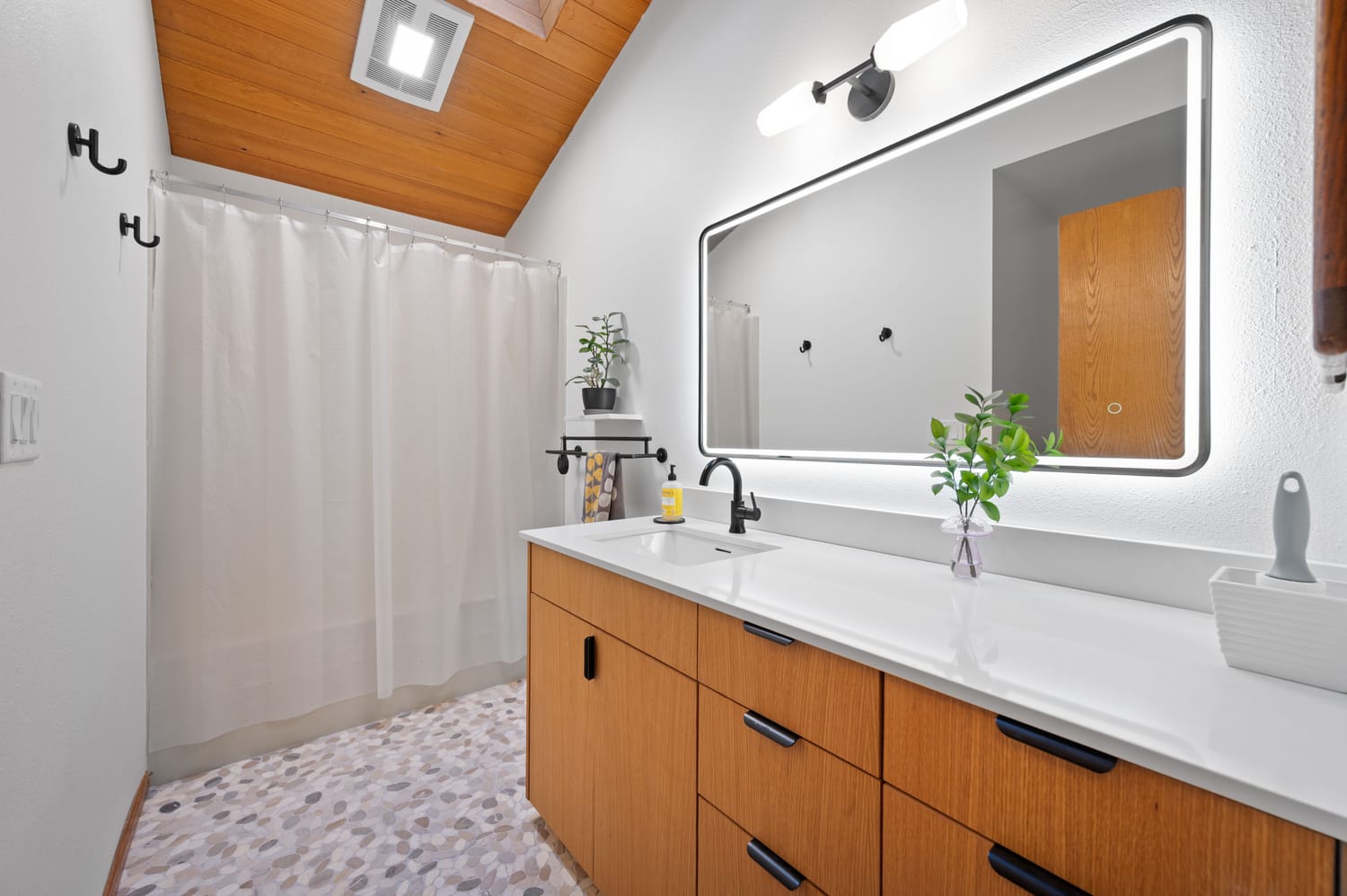
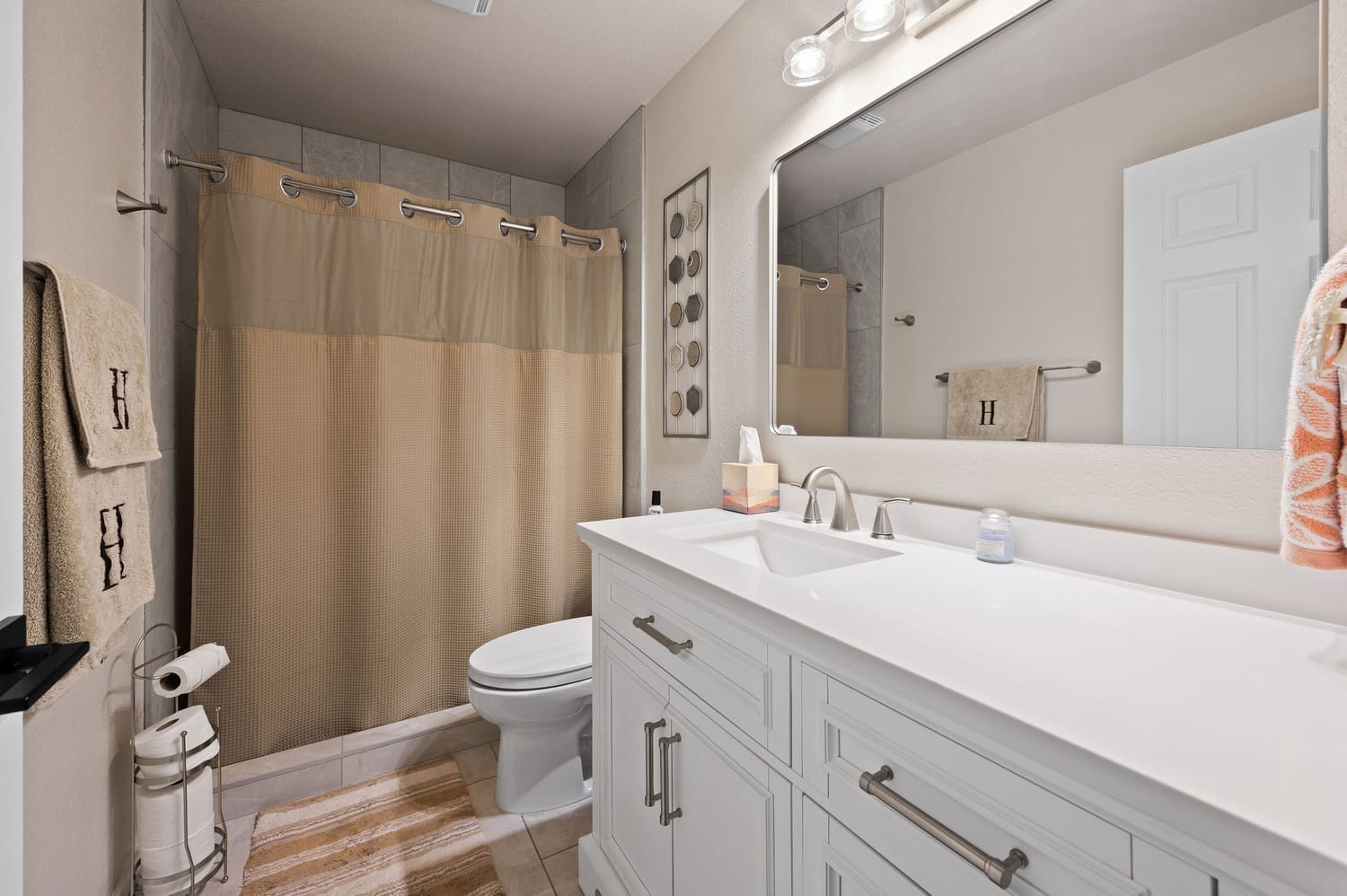
The secondary bathroom got a new vanity and floor tile. The laundry room got new flooring. When the crew knows the house and you’re already in it, it’s the right time to close out the things that have been on the list. Gary and Amy got three rooms done. Not one.
The Result:
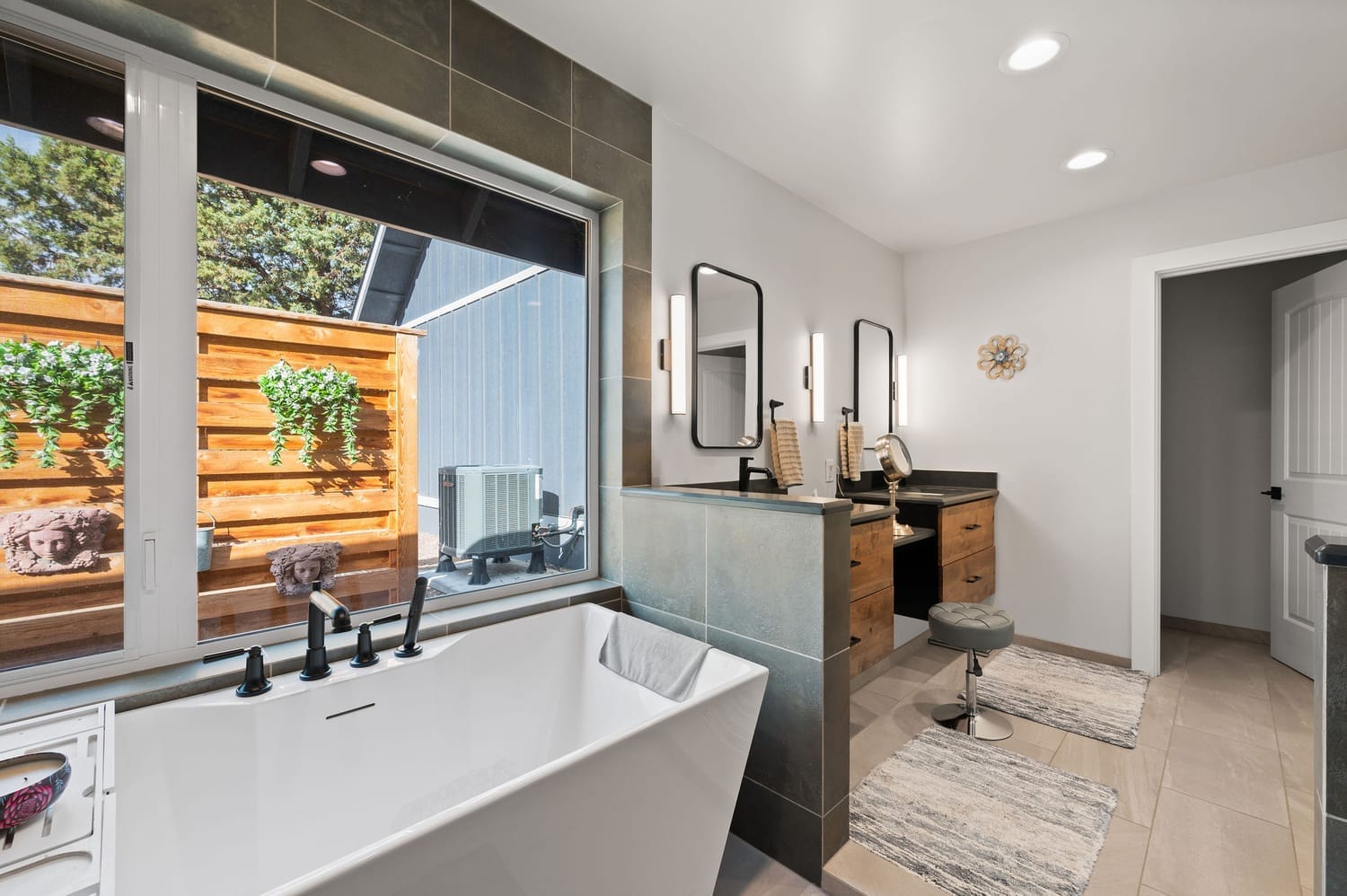
Amy called it her Lavish Loo before it was even finished. The name works because the bathroom earned it not by being expensive-looking, but by being exactly what they needed it to be. The fall risk is gone. The rot is gone. The wasted square footage is gone.
What’s there instead is a primary bathroom with the feel of a spa, built into a mid-century modern home that had been waiting for this moment for about fifty years. it was worth the wait.
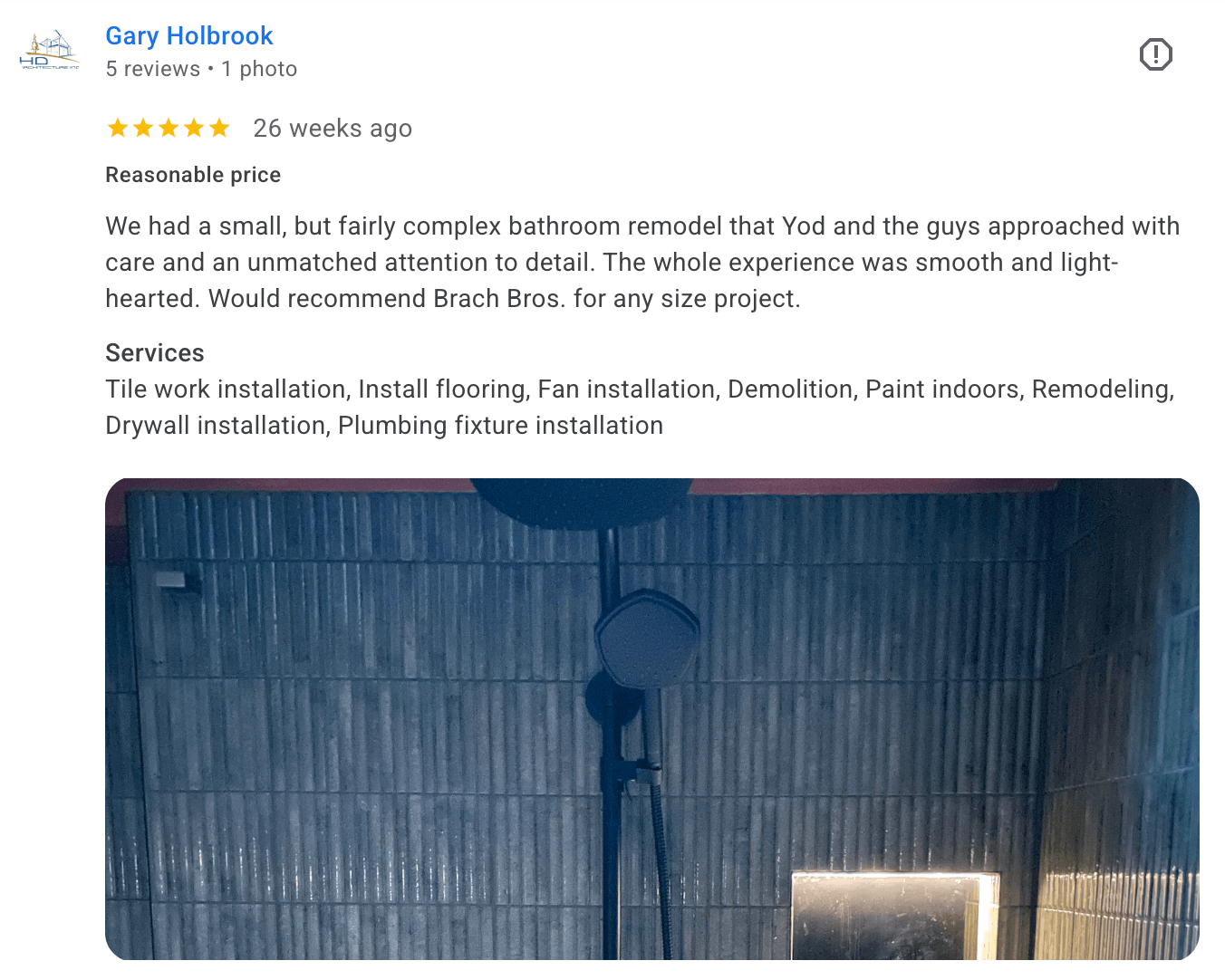
this is what gary said when he saw the finished bathroom: “i cant belive how the branch bros brought my vision to life. it is exactly how i pictured it when i drew the plans.
What This Project Demonstrates:
You know how doctors are the worst patients? Gary, as an architect, was an asset in this project.
When your homeowner is an architect, the design conversation moves faster. Gary didn't need to be convinced that rift-sawn white oak handles bathroom humidity better than painted MDF, or that Schluter profiles are worth the extra installation time, or that blocking for grab bars now costs almost nothing compared to retrofitting them later. He already knew. So we talked about execution, not education.
The aging-in-place thinking was from the very beginning. Gary and Amy didn't treat it as a compromise or as something to add later. The zero-threshold entry, the rough-blocked walls, the layout that works now and will keep working later, and none of it looks like an accommodation. It looks like a well-designed bathroom. The right time to build for the long term is before you need to. That's the only time it's “invisible”.
And then there's the crawl space. A less thorough crew would have found the HVAC in the way and worked around it. Branch Brothers pulled it out, moved the plumbing correctly, and reassembled the ductwork. That's what it sometimes takes to do the job right. It wasn't in the original scope. It was in the way of doing the work properly. So it got done.
Considering a Similar Remodel?
If you’re staying in your Bend home long-term and thinking about your primary bathroom, here’s what this project showed us matters most:
• Removing a safety risk before it becomes a medical event
• Designing for aging in place before it’s urgent, when it’s still cheap to do it right
• Finding what’s actually wrong before you plan what goes back in
• Custom work that fits the house, not a product catalog that compromises
• One crew, beginning to end, who treats the home like it’s their own
After Gallery
Why ChooseBranch Brothers Construction?
With over two decades of experience, our team combines expert craftsmanship with personalized service. Whether it’s a full remodel or a small upgrade, we’re here to create spaces that reflect your vision and enhance your home.

Building the Future, Restoring the Past since 2009

