
Rodents chewed through every wire in the building
Before We Touched a Wall
The first thing I noticed when I walked in wasn’t the view. It was the smell. Rodent droppings were everywhere, and active bird nests were inside the walls. This place had been neglected for years, and it sat in paradise.
When you got past the smell, the kitchen was dark and cramped. The bathroom had no window, and if the power went out, you’d be standing in pure black. The layout was so closed off that two people couldn’t comfortably move through the space at the same time.
This was a studio cabin perched on a cliff above the Deschutes River, in the canyon between Bend and Redmond. The view is extraordinary, straight down into the canyon, the river below, and forest on every side. From the outside, you could see exactly what this place could become. From the inside, you could see exactly what had been left to rot.
Before we touched anything, we had one question that mattered more than the design: was this structure safe? The cabin sat closer to the cliff edge than any current building code would allow. It had been grandfathered in, and we had to verify that status with Deschutes County before any permit could move forward. Then we crawled underneath.
Pre-Construction Inspection:
• Crawled the full post-and-beam foundation and inspected every footing, beam, and concrete element for erosion, wood rot, and earth shifting
• Checked all plumbing supply and drain lines and found active cracks and leaks posing freeze/thaw erosion risk at the cliff face
• Assessed all electrical wiring throughout the structure and found rodent damage on wires in multiple locations throughout the home
• Verified Deschutes County grandfathered setback status before any permit applications were filed
• Conducted full pest damage assessment and completed hantavirus remediation before demo began
The Homeowner's Challenge:
A Spectacular Setting and a Structure Nobody Had Looked at in Years
The homeowner wanted a modern, open space that matched the view. Branch Brothers needed to answer a harder question first: was it safe enough to build on? The cabin had been constructed at the edge of a cliff, ignored for years, and filled with pests. The gap between what was visible and what was real was significant. Neglect, pest invasion, and a location that made standard contractor access difficult had combined into a project that would expose everything before anything new could be built.
• Crawled the full post-and-beam foundation and inspected every footing, beam, and concrete element for erosion, wood rot, and earth shifting
• Checked all plumbing supply and drain lines and found active cracks and leaks posing freeze/thaw erosion risk at the cliff face
• Assessed all electrical wiring throughout the structure and found rodent damage on wires in multiple locations throughout the home
• Verified Deschutes County grandfathered setback status before any permit applications were filed
• Conducted full pest damage assessment and completed hantavirus remediation before demo began
How Do You...
• How do you verify structural safety on a post-and-beam foundation built to the edge of a cliff?
• How do you replace a full electrical system in a structure where every wire has been compromised by rodents?
• How do you match a discontinued siding profile on a factory-built kit home without losing visual continuity?
• How do you bring nature inside without competing with a panoramic canyon view that already wins every argument?
• How do you build a cantilevered deck over a canyon safely, on budget, and without triggering additional permit complications on a grandfathered lot?
The cabin as we found it
Dark, cramped, closed off
No windows. No light.
What the walls were hiding
Our Approach
Foundation Before Finishes
The first thing we did was crawl underneath. We inspected every footing and beam in the post-and-beam foundation, checked for erosion at the cliff face, and assessed every plumbing line under the structure. The foundation was sound. The plumbing was not. We replaced the entire water system before any design work moved forward.
Why it matters: On a cliff with freeze/thaw cycles, a plumbing leak is not a maintenance issue. It is a slow erosion event that compounds year over year until it becomes a structural one.
The Siding Problem Nobody Could Buy Their Way Out Of
The original cabin was a factory-built kit home with 2x6-inch shiplap siding. That profile is no longer manufactured. Instead of installing whatever modern siding was close enough and accepting the visual mismatch, we located a local Central Oregon sawmill and had the exact profile custom-milled to match. We sourced the lumber and coordinated delivery ourselves.
Why it matters: A structure this site-specific and this permanent deserves an exterior that reads as one continuous thing. The easy option was cheaper and wrong.
Every Wire, Replaced
Rodents had chewed through wiring throughout the entire structure. There was no safe partial solution. We replaced the entire electrical system from panel to outlets and permitted the work through Deschutes County. Getting that permit through took extra effort given the unconventional placement of the home on a grandfathered cliff-edge lot. We pushed until it was done.
Why it matters: A partially compromised electrical system in a remote, forest-surrounded cabin is a fire waiting for a timeline. We removed all uncertainty.
Sealed Against Re-Entry
During the demo, we found every hole in the siding and building envelope where pests had been entering. We searched methodically and sealed each one before the building was closed back up. We also installed a metal roof, the right call for a structure surrounded by forest in wildfire country, exposed to high winds and traveling embers from any direction.
Why it matters: A future pest invasion on this property does not just cost money. On a cliff over a canyon, it compromises the integrity of a building we just rebuilt. We made sure the work we did could not be undone.
Design Details That Made a Difference:
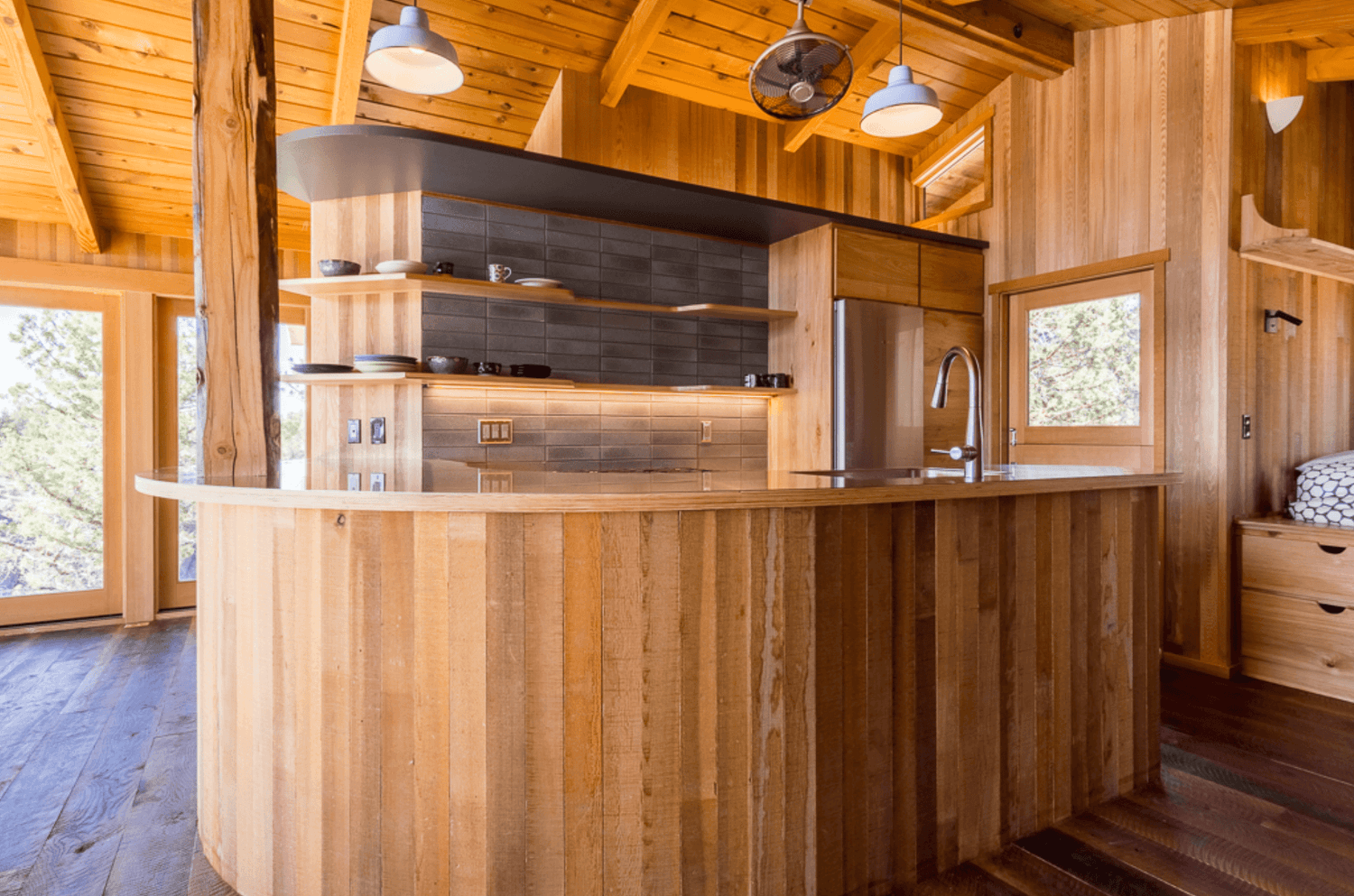
Curved Custom Kitchen Cabinetry
Custom-built curved cabinetry designed specifically for this studio's dimensions, with floating shelves and built-in storage that blends seamlessly with the natural aesthetic. Every drawer, pull, and proportion was built for this room.
Why it matters: In a studio where the kitchen is always visible, a standard boxy layout would have competed with the view. The curves create flow and make the space feel larger than its footprint.
Floor-to-Ceiling Heath Ceramics Tile
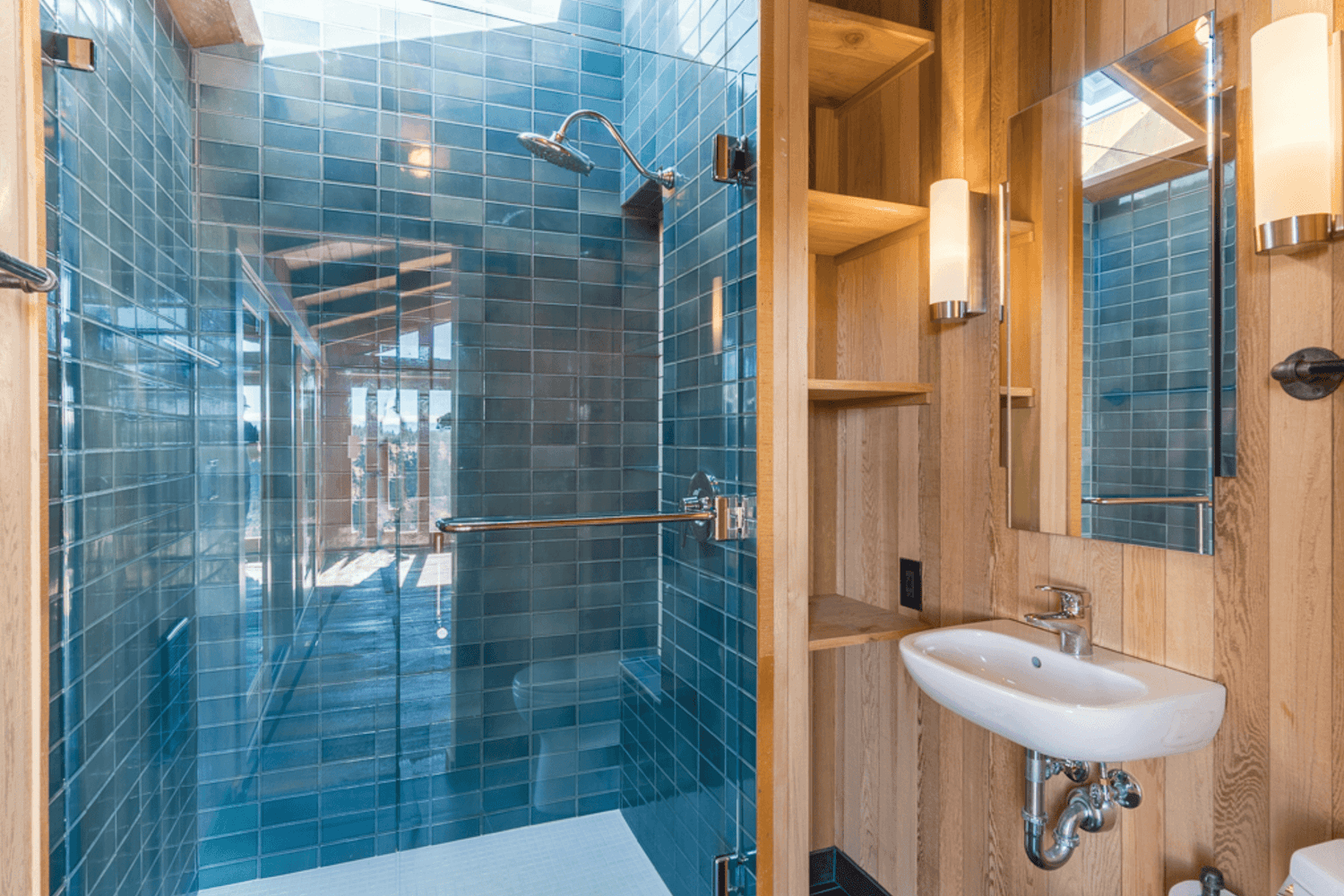
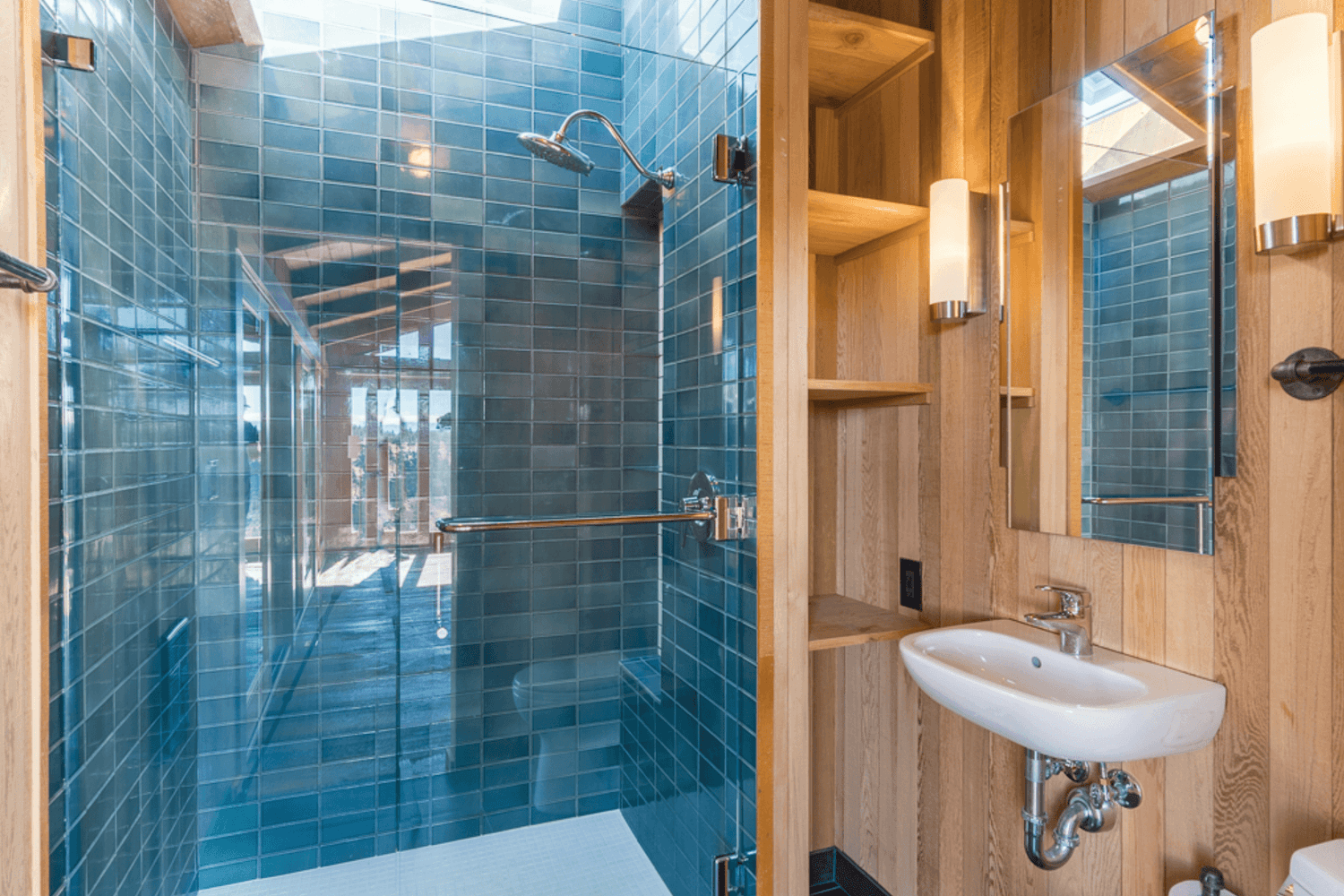
Handmade Heath Ceramics tile from San Francisco, installed floor-to-ceiling in the bathroom, with a skylight above. Heath was chosen for its handmade texture and natural palette, which aligns with the wood-dominant interior.
Why it matters: The bathroom was the darkest room in the cabin. It is now one of the most dramatic. Standing in that shower with light pouring through the skylight feels like standing under open sky.
Inlaid Bed with Hidden Compartment
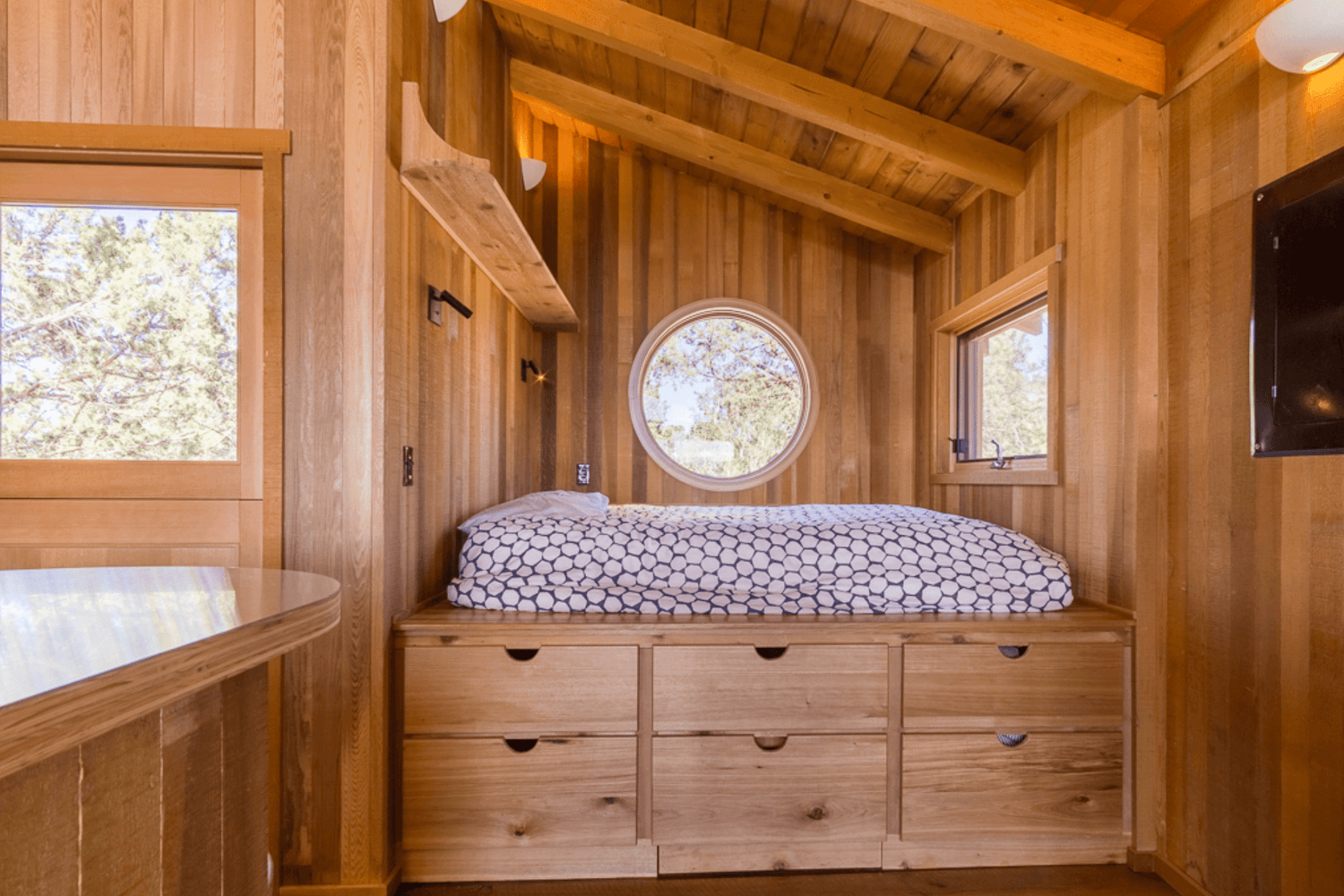
A custom-built bed inlaid into the wall with storage drawers underneath and a hidden compartment beneath one of them. Built to exact dimensions for this studio. The hidden compartment opens via a mechanism concealed in the drawer pull.
Why it matters: In a studio, the bed either anchors the space or dominates it. Built into the wall, it creates a sense of security and enclosure without consuming the room. The hidden compartment was the feature the homeowner didn’t know he wanted until he had it.
Cantilevered Deck Over the Canyon
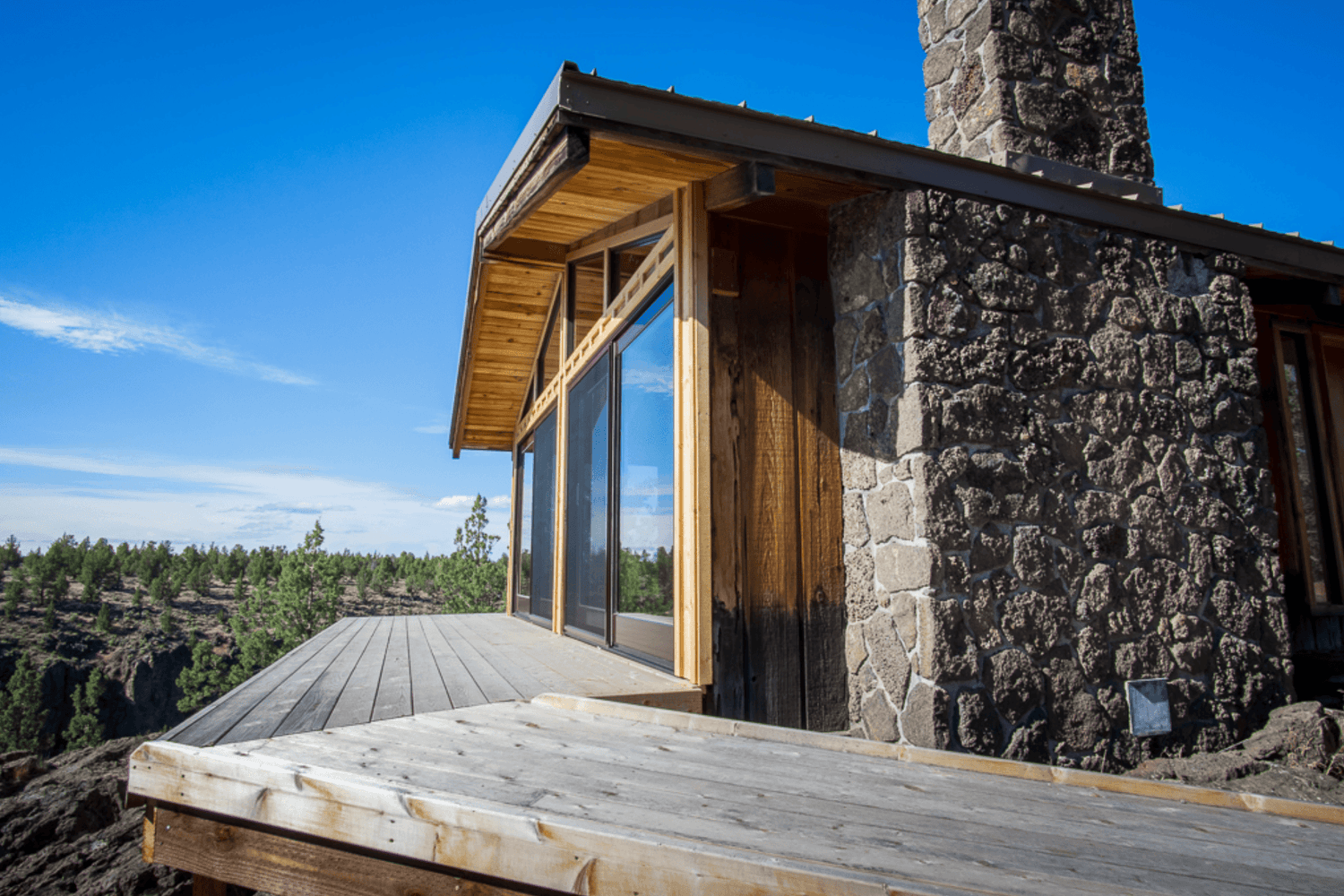
A deck cantilevered over the cliff edge, structurally engineered for the specific load and exposure conditions of this site, with a wheelchair-accessible ramp from the driveway. The deck extends the living space directly over the canyon.
Why it matters: The whole point of this property is the view. The deck makes the canyon feel like part of the home rather than something you observe from behind glass.
The Final Transformation:
The first thing you notice when you walk in now is the view. It looks directly down into the Deschutes River canyon, and you feel like you are on top of the world.
The entire interior is custom-crafted wood with a natural finish. No drywall anywhere. Oak floors, cedar walls, Douglas fir ceiling. The curve of the kitchen cabinets is clearly built for this exact space, creating a sense of flow and ease that a standard layout could never achieve. The decks give you the feeling of an eagle’s perch over the canyon.
The bathroom, which once had no windows at all, now has a skylight. The tile goes floor to ceiling. Standing in that shower, with light pouring in from above, feels like standing under a waterfall in the open sunshine. It does not feel like an interior space.
The bed is nestled into the wall, custom-built with storage underneath and a hidden compartment built into one of the drawers. It feels like a cocoon, secure and deliberate, in a space that is otherwise completely open to the landscape.
The layout that once made it impossible for two people to share the space now flows. The kitchen has storage that doesn't clash with the aesthetic. The bathroom has light. The deck has a ramp. The windows are large-format patio door systems chosen specifically to avoid degradation, sticking, or seal loss on a remote cliffside property over time.
When the homeowner saw it finished, he told us it was more than he had ever hoped for. What he kept returning to was the cohesion. How completely the inside matched the outside. That does not happen by accident.
This cabin had been sitting on one of the most extraordinary pieces of land in Central Oregon, neglected, for years. It deserved better than a patch job. That is not a philosophy. That is what the site demanded.
After Gallery


Why ChooseBranch Brothers Construction?
With over two decades of experience, our team combines expert craftsmanship with personalized service. Whether it’s a full remodel or a small upgrade, we’re here to create spaces that reflect your vision and enhance your home.

Building the Future, Restoring the Past since 2009

